Haircut Designs for Men: 15 Sharp Ideas & Guide (2026)

A regular fade looks clean. A fade with a razor-sharp design carved into it? That turns heads. Haircut designs the patterns, lines, and shapes shaved into short hair have gone from barbershop specialty to mainstream style, and in 2026 they’re bigger than ever.
I’ve carved everything from simple single lines to full tribal artwork into clients’ hair, and I can tell you this: a good design takes a standard cut and makes it personal. It’s the difference between a haircut anyone could have and one that’s unmistakably yours.
In this guide, I’ll break down what haircut designs actually are, the 15 best haircut design ideas for men right now, which cuts they pair with, how to ask your barber for one, and how to keep the lines looking sharp.
What Are Haircut Designs?
Haircut designs are patterns shaved into short hair using clippers, trimmers, or a straight razor. The barber removes hair in deliberate shapes lines, zig-zags, curves, geometric shapes, even detailed artwork creating contrast between the shaved design and the surrounding hair.
The trend has roots in hip-hop and sports culture, where athletes and artists used hair art to stand out. Today it’s everywhere: kids getting lightning bolts, professionals adding a subtle hard part line, and design specialists creating full portrait-level artwork on the back of the head.
Designs work best on short, faded, or tapered hair, because the design needs short surrounding hair to show contrast. The darker and thicker your hair, the bolder the design reads — the shaved lines pop against the skin.
15 Best Haircut Designs for Men
From subtle to statement-making, here are the designs worth asking for in 2026.
Freestyle Razor Designs
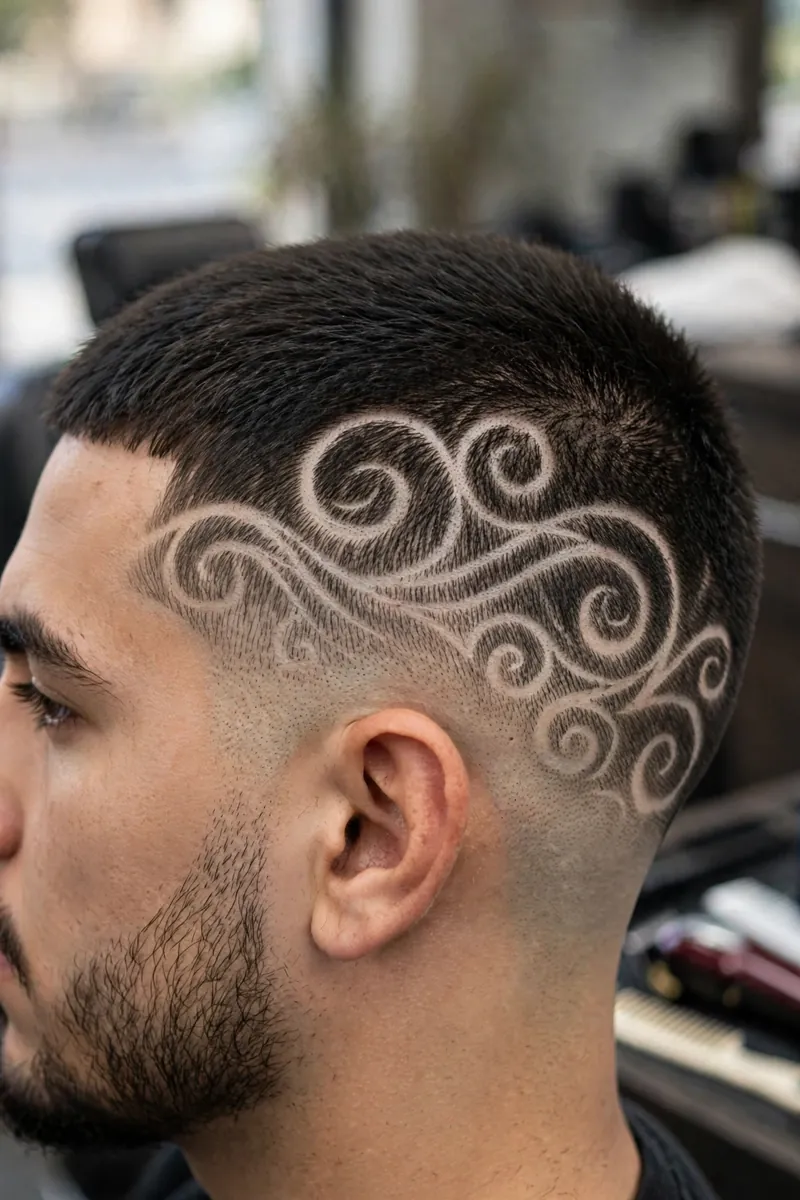
The freestyle is where barbering becomes art. Instead of following a template, the barber freehands flowing curves, swirls, and abstract shapes with a trimmer or razor — usually across the side or back of the head. No two are exactly alike, which is the whole point. This is the design to ask for when you trust your barber’s creativity and want something nobody else has. It pairs best with a mid or high fade, which gives a clean canvas for the artwork.
Zig-Zag Lines
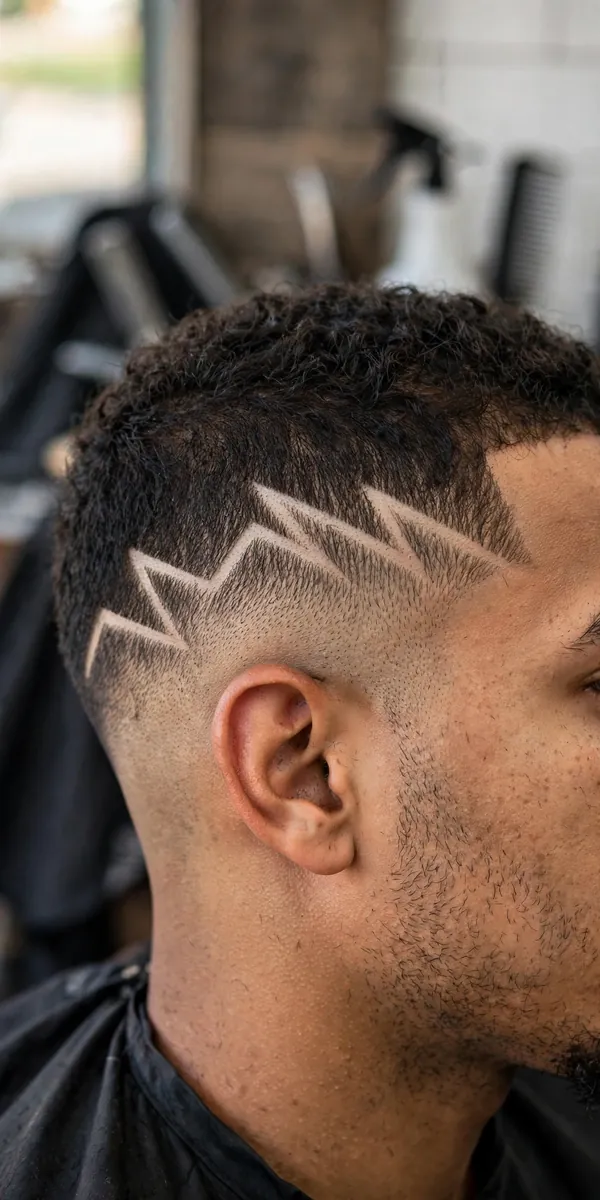
The classic entry-level design that never goes out of style. One or two sharp zig-zag lines carved along the side of the head, usually following the fade line. It’s bold enough to notice, simple enough for almost any skilled barber to nail, and it grows out gracefully. If you’ve never had a design before, start here — it’s the gateway design for a reason.
Lightning Bolt
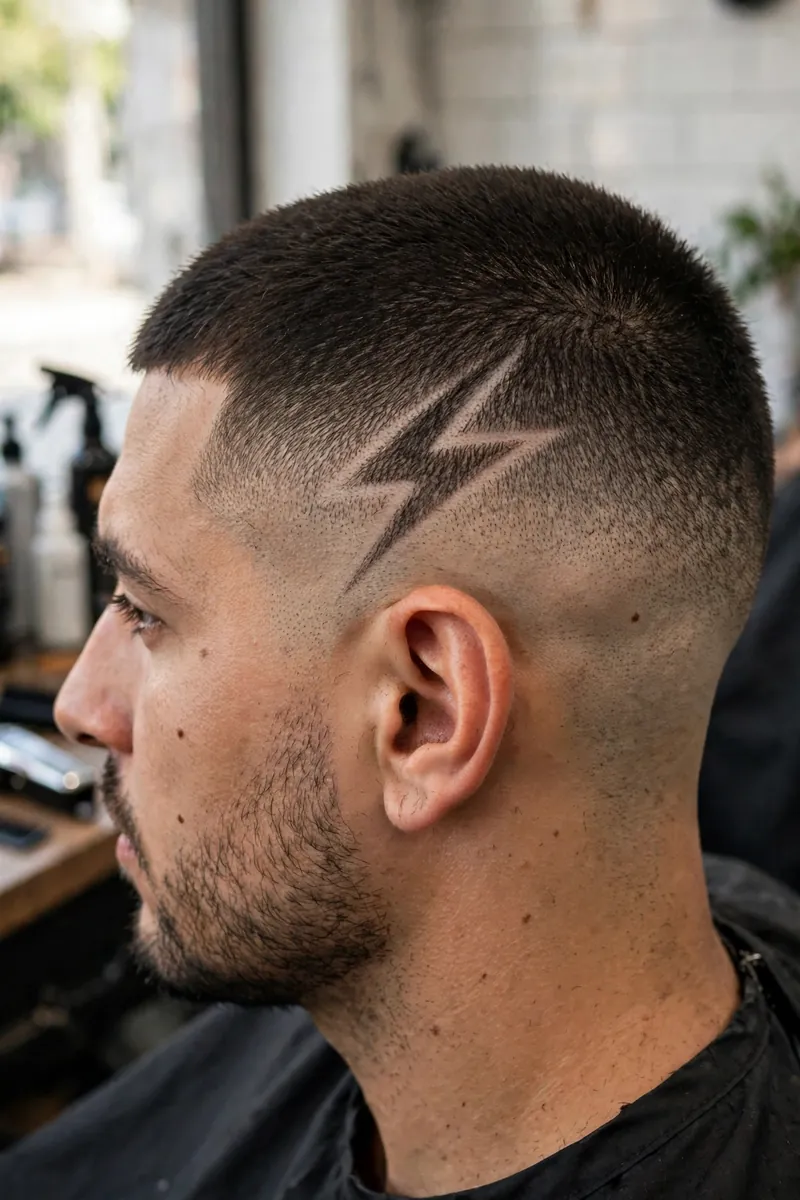
A single jagged bolt shaved into the side or nape — pure energy. The lightning bolt design is a favorite with younger guys and athletes because it reads fast, sharp, and confident. It works best as one clean, bold bolt rather than several small ones. Placement matters: on the side above the ear it’s visible and punchy; at the nape it’s a surprise detail.
Geometric Shapes
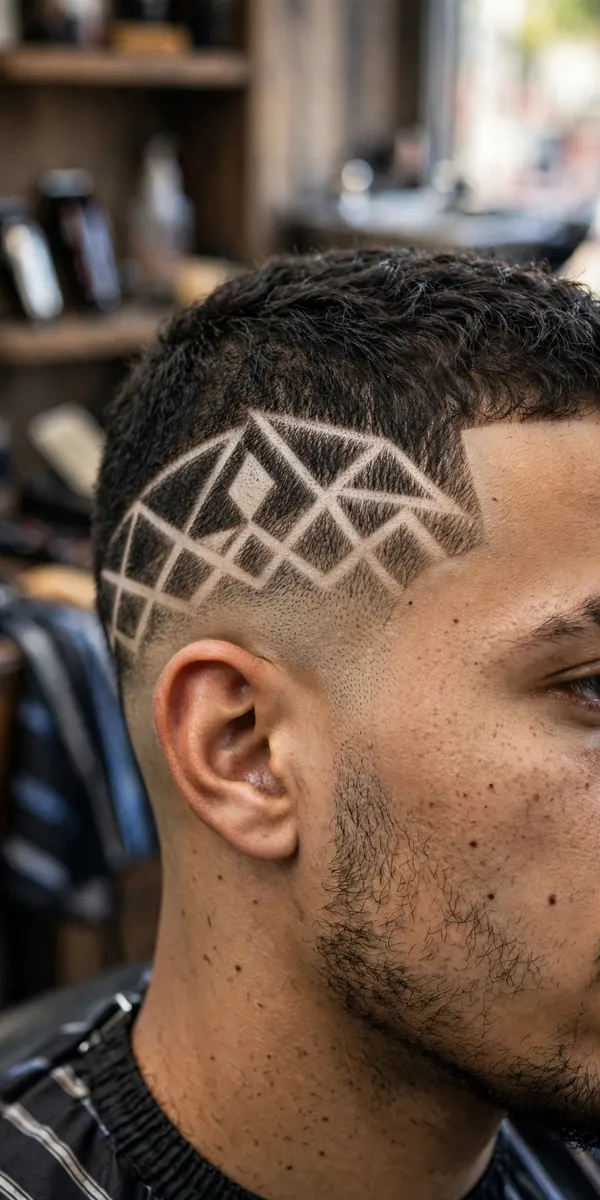
Triangles, diamonds, squares, and sharp angular patterns carved with ruler-straight precision. Geometric designs look modern and architectural — they’re the choice for guys who want edge without chaos. The key is symmetry and clean lines, so this one demands a barber with a steady hand. It shows up best on straight, dark hair where every angle reads crisply.
Hard Part with Line-Up
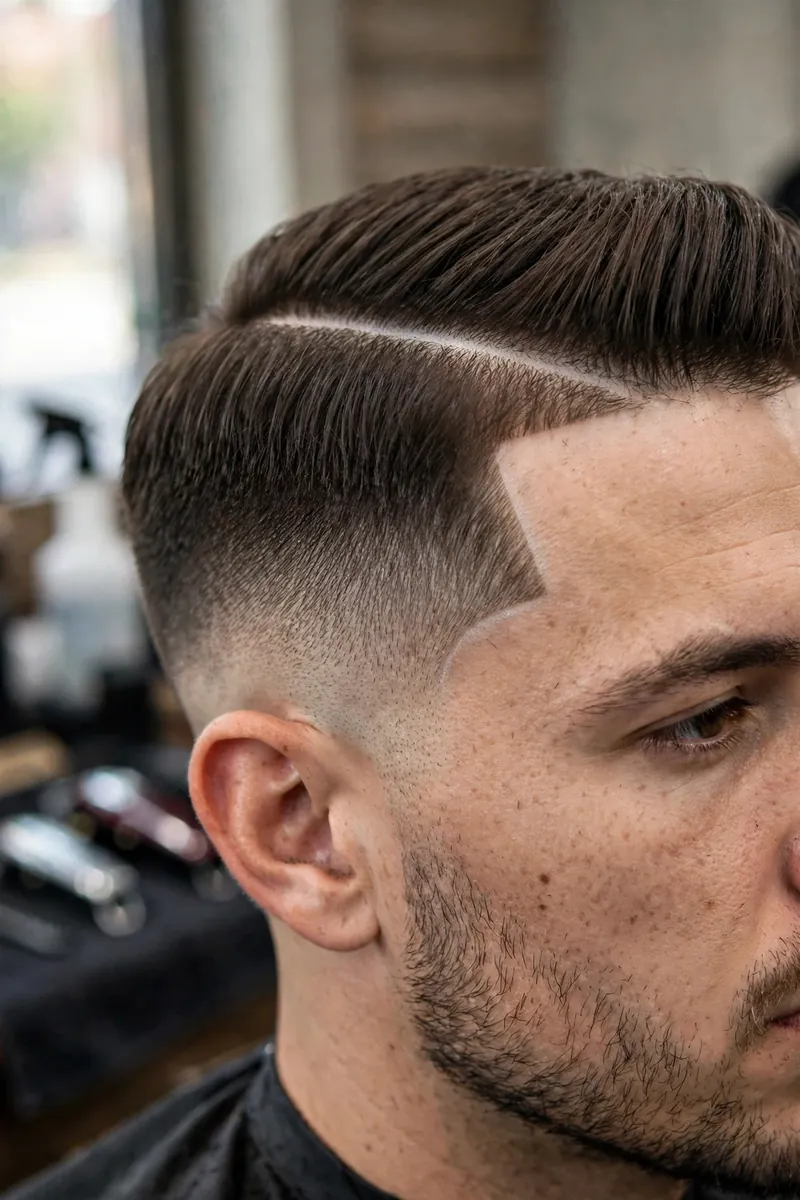
The most wearable design on this list. A hard part is a single clean shaved line that defines your part, paired with a razor-sharp line-up along the hairline and temples. It’s structured, professional, and adds definition to almost any cut — side parts, crops, even longer styles. If you work in a conservative office but still want some personality, this is your design.
Curved Line Around the Ear
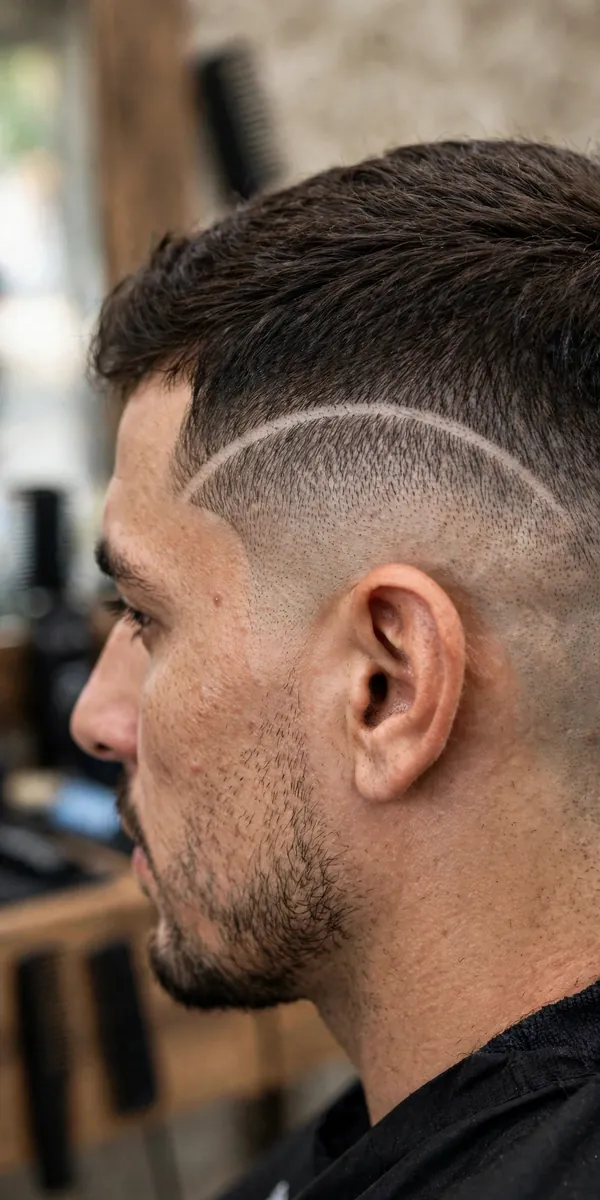
A smooth arc that follows the curve of the ear or sweeps from the temple toward the back. It’s subtle, elegant, and enhances the natural flow of the haircut rather than fighting it. This design is perfect for guys who want something custom without anything loud — from a distance it just looks like a really clean cut, up close it’s clearly intentional.
Star Design
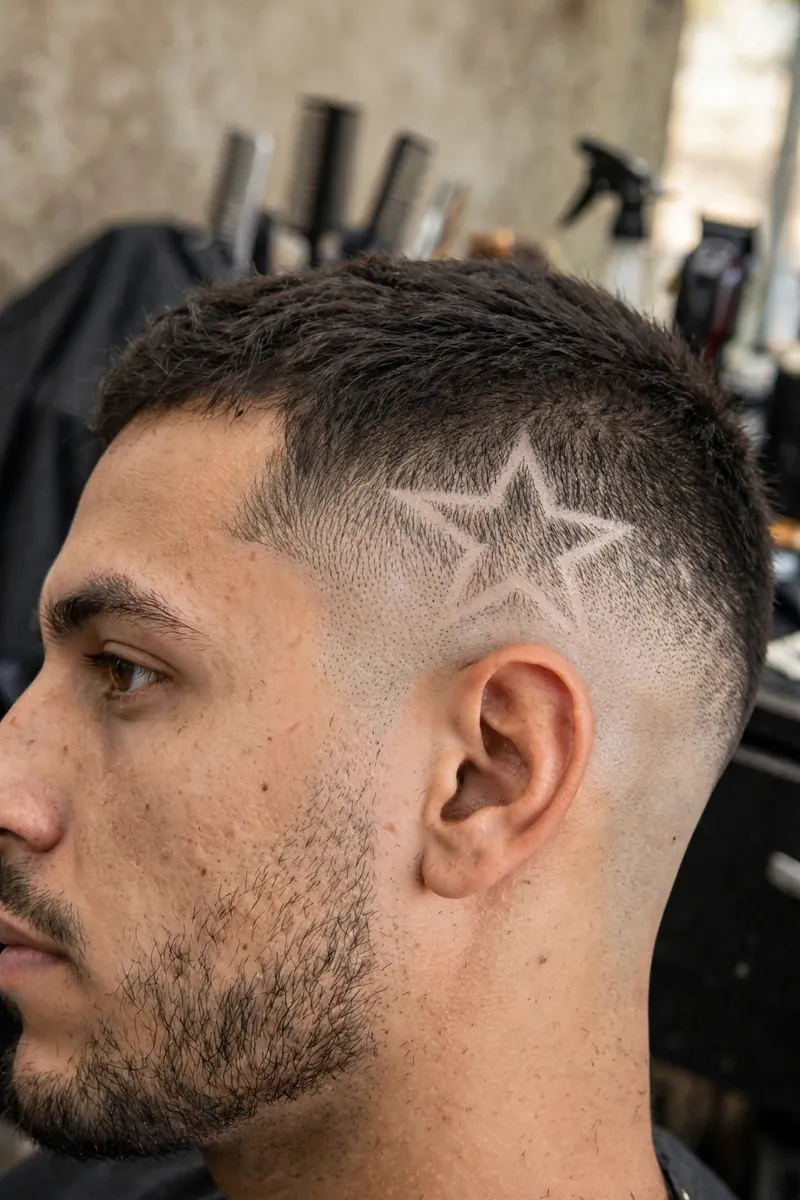
A five-pointed star shaved into the side or back simple, bold, and universally understood. The star works as a standalone statement or as part of a larger composition with lines and curves around it. It’s one of the most requested single-shape designs in my chair, especially paired with a skin fade where the contrast makes it pop hard.
Tribal Patterns
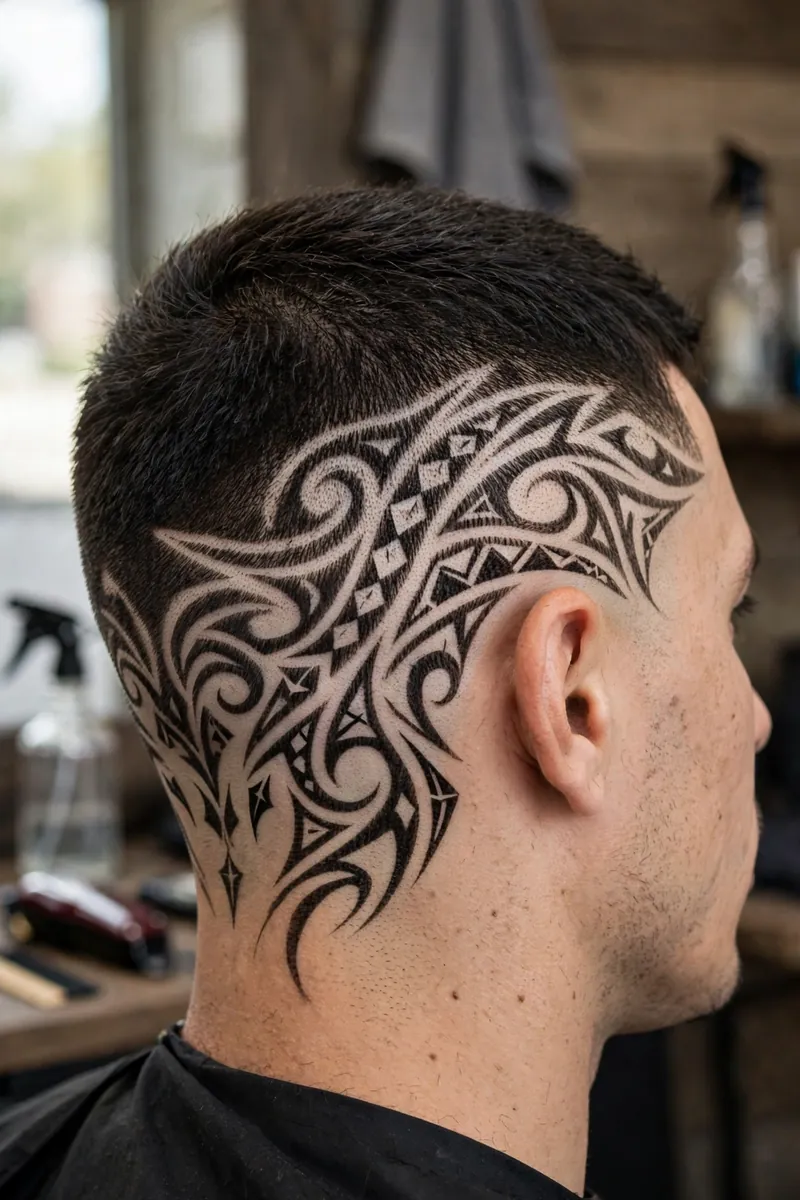
Flowing, interlocking tribal-style curves and points the most artistic end of the spectrum. Tribal designs take real skill and time, often 30+ minutes of detailed clipper work on top of the haircut itself. The result is genuinely a piece of art on your head. Find a barber who specializes in designs for this one; it’s not a service to trust to just anyone.
Cross Design at the Back

A clean cross carved at the nape or the back of the head — understated from the front, sharp from behind. It’s a popular choice for guys who want a design with meaning without broadcasting it to everyone they meet. The symmetry of the cross shape also makes it one of the easier designs to keep looking fresh between touch-ups.
V-Shape Neckline Design
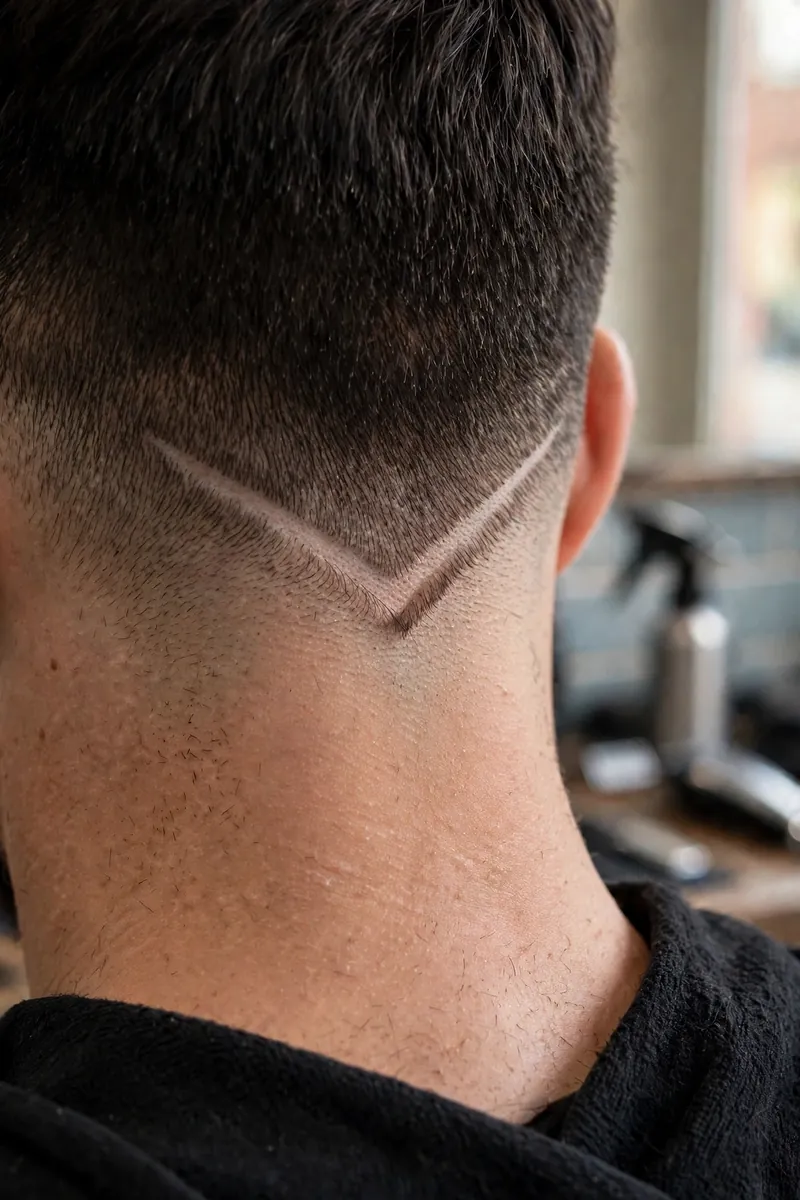
Instead of the standard straight or tapered neckline, the barber carves a sharp V point at the nape — sometimes with an additional line or small shape inside it. It’s a detail most people won’t notice until you turn around, which is exactly its charm. Clean, masculine, and it makes even a simple cut look deliberate from every angle.
Double Parallel Lines
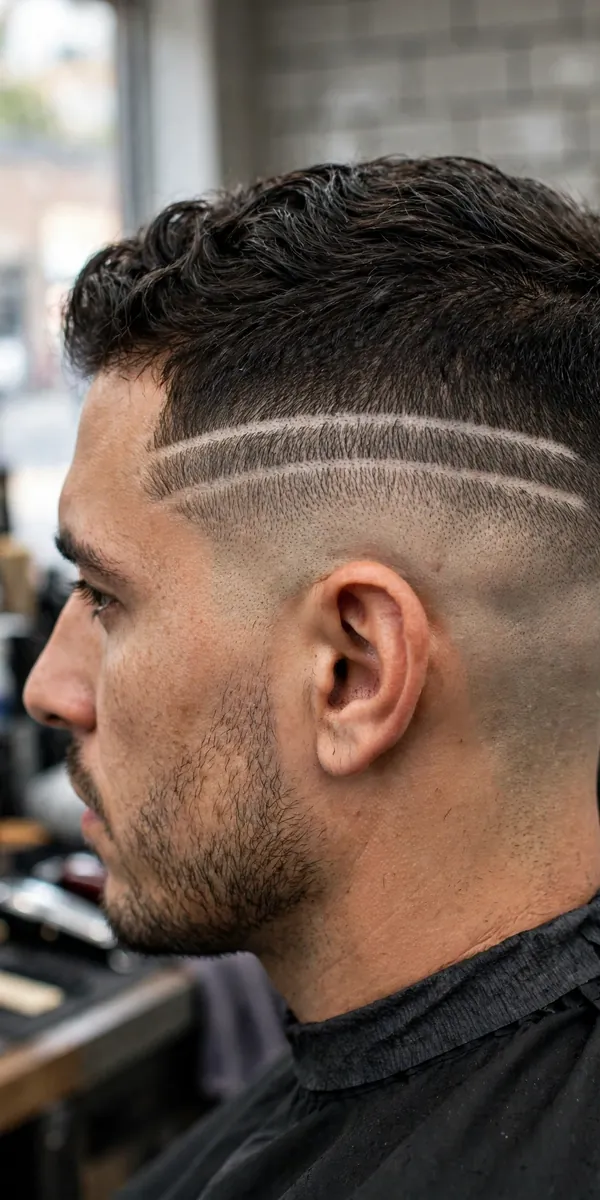
Two clean lines running parallel — along the side, through the fade, or framing the temple. Minimalist but unmistakable. The double line is the design equivalent of a well-tailored suit detail: it doesn’t shout, but it elevates everything around it. It also grows out better than most designs, since two simple lines blur into the fade gracefully.
Diamond Shape
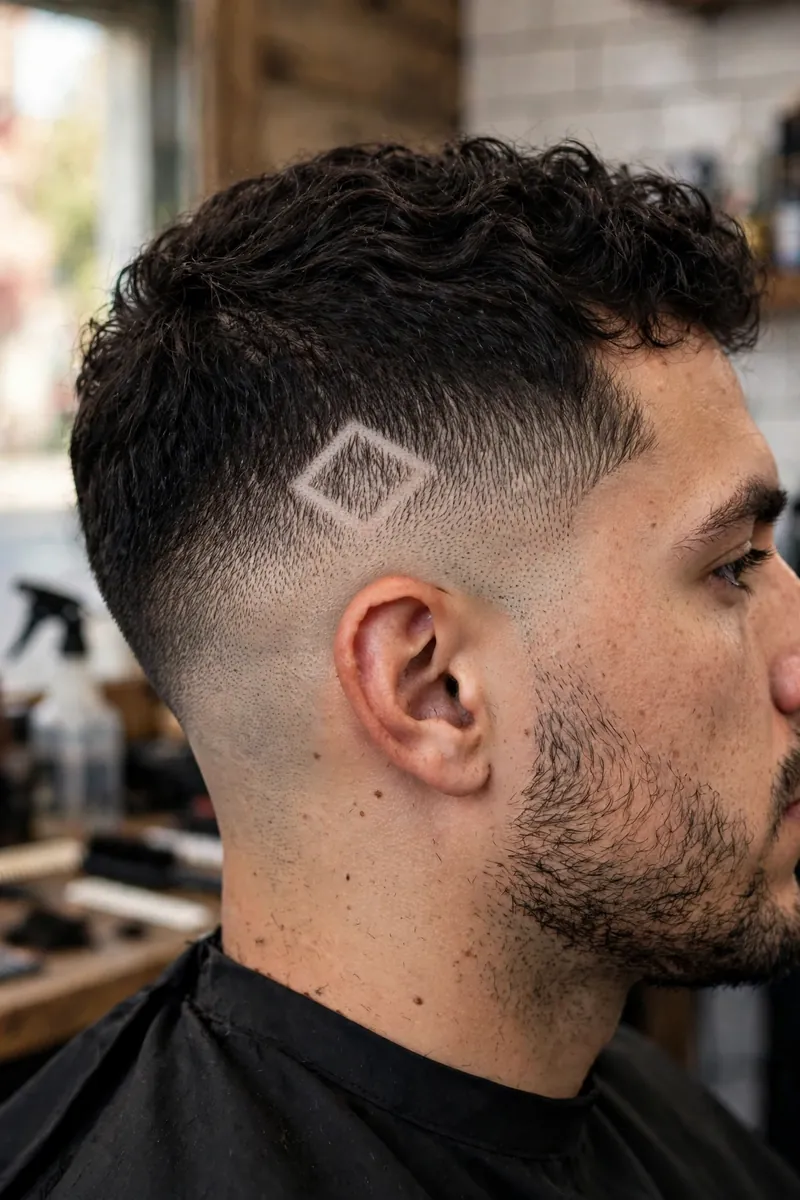
A single diamond carved into the fade — geometric, sharp, and eye-catching. The diamond works beautifully as a focal point on the side of the head, especially when the barber leaves it floating in a clean fade with no other competing lines. It’s bold without being busy, and it photographs incredibly well.
Arrow Design
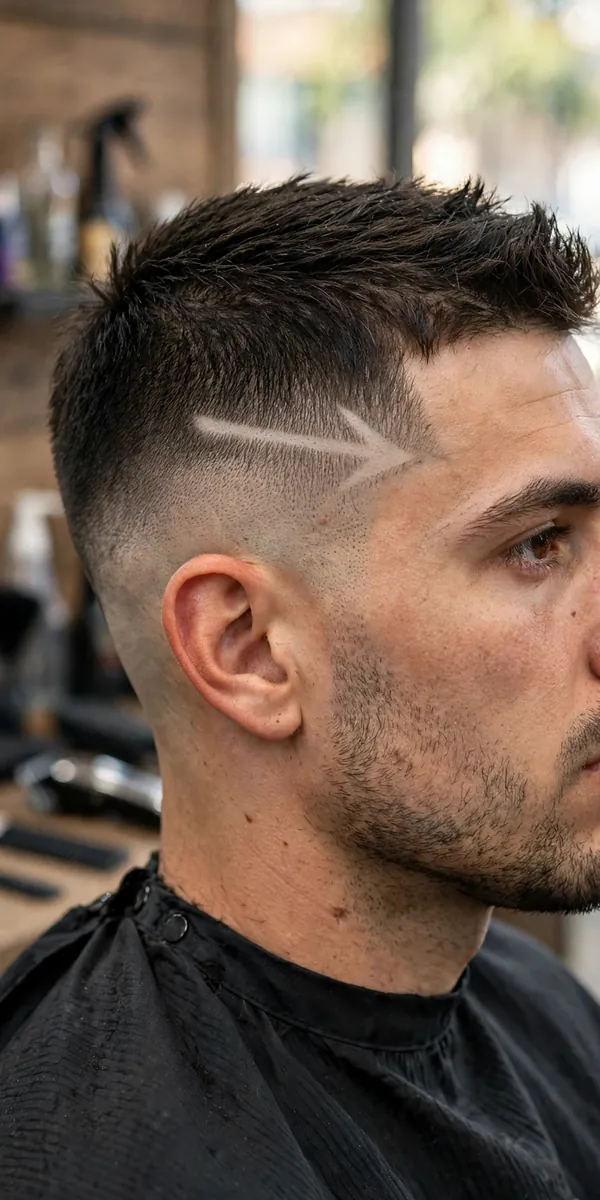
A pointed arrow shaved into the side, usually aiming forward toward the face. It adds direction and attitude to the cut — the visual equivalent of leaning in. The arrow pairs naturally with fades and undercuts, where the longer top gives it something to point toward. Keep it to one arrow; more than that starts looking cluttered.
Wave Lines
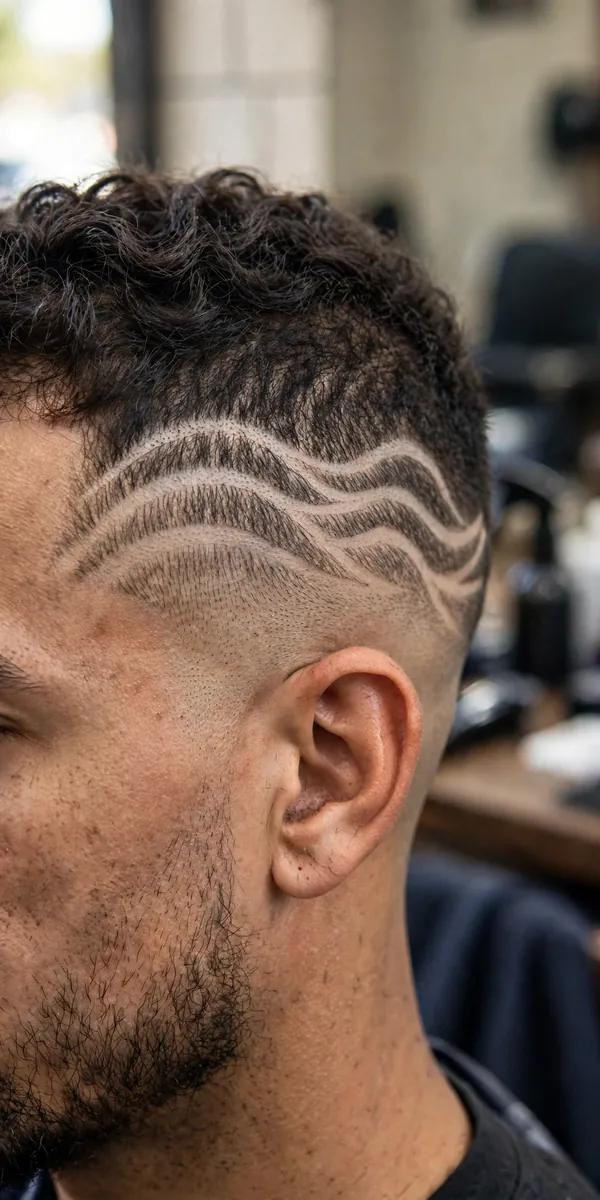
Flowing, ocean-like curves carved across the side or back — softer and more organic than zig-zags or geometric shapes. Wave designs have a relaxed, artistic feel that suits wavy and curly hair particularly well, since the design echoes the hair’s natural movement. It’s creative without being aggressive.
Minimalist Single Line
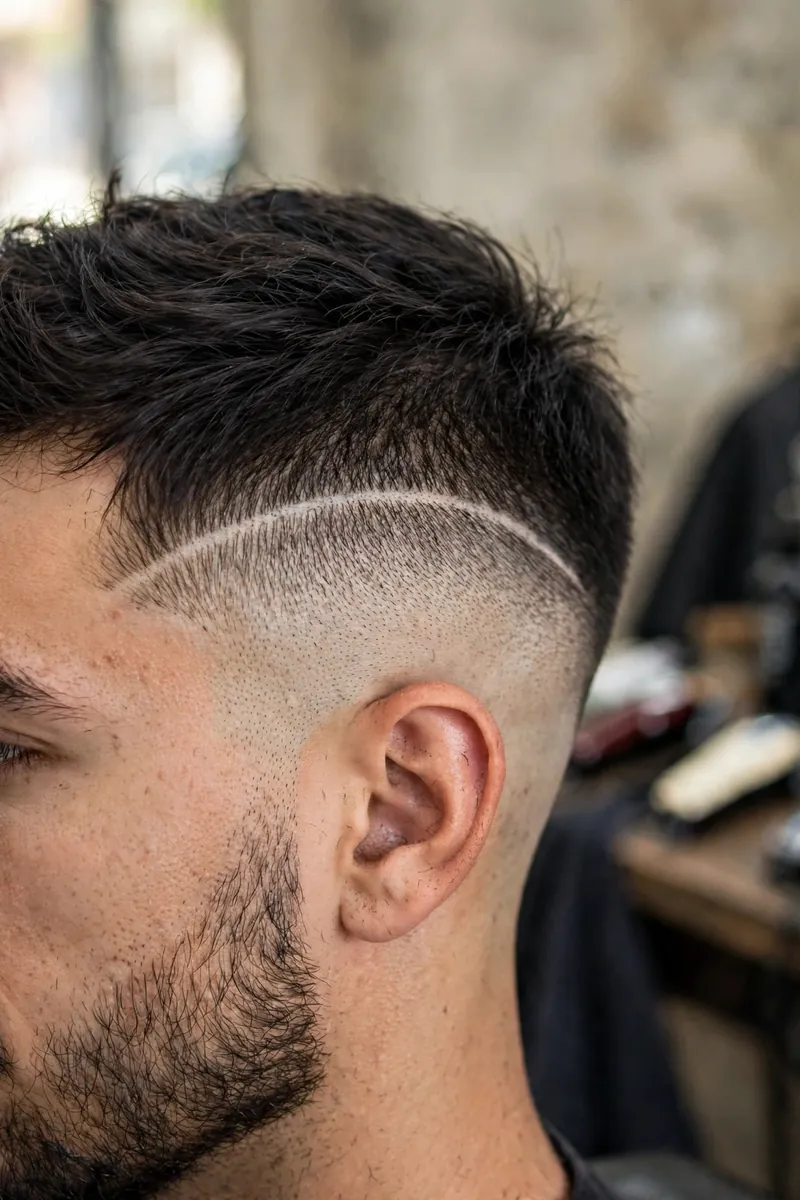
One line. That’s it — a single shaved line placed with intention, usually along the part or through the fade. The minimalist line is the safest design you can get: it suits every age, works in professional settings, grows out invisibly, and takes your barber about thirty seconds. If you’re design-curious but cautious, this is where you start.
Best Haircuts to Pair With Designs
Not every cut is a good canvas. Designs need short sides with clear contrast, so these are the cuts that show them off best:
Skin fade and mid fade: The number one canvas for designs. The tight fade gives maximum contrast, making every line pop. Almost every design on this list was made for a fade.
Buzz cut: The whole head is one even canvas — perfect for larger designs that wrap around the head, and the uniform length makes patterns read cleanly.
Undercut: The sharp disconnect between long top and short sides is a natural frame for designs carved into the sides.
Mohawk and faux hawk: The shaved sides are begging for artwork. Designs on a mohawk fade are about as bold as it gets.
Crew cut: A single line or hard part elevates the classic crew cut without changing its clean character.
Avoid designs on long, un-faded hair — without short surrounding hair, there’s no contrast and the design just disappears.
How to Ask Your Barber for a Haircut Design
Designs live or die on communication. Here’s how to get what you actually want:
Bring a photo. Non-negotiable for designs. “A zig-zag” means different things to different barbers a photo removes all guesswork. Save two or three reference photos on your phone before you sit down.
Point to the placement. Tell your barber exactly where you want it: side, back, nape, around the ear, through the fade. Placement changes the whole look, so don’t leave it to assumption.
Ask if they do designs regularly. Not every great barber is a great design barber. If designs aren’t their thing, they’ll tell you — and you’re better off finding a specialist than getting a wobbly line. Check their Instagram for design work first.
Discuss the size and boldness. Bigger and bolder reads from farther away but grows out faster. Smaller and subtler lasts longer between visits. Decide which matters more to you.
Budget extra time and money. A design typically adds 15–30 minutes and $10–$25 to the haircut, more for complex artwork. Don’t book a rushed slot and expect a masterpiece.
How Long Do Haircut Designs Last?
Here’s the honest truth: designs are temporary art. Hair grows about half an inch per month, and a shaved design starts losing its crispness after 1–2 weeks. By week three, most designs have softened into a blur.
To keep lines sharp, plan a touch-up every 2 weeks — many barbers will clean up a design between full haircuts for a small fee. Simpler designs (single lines, hard parts) hold up a bit longer; intricate artwork fades fastest.
The upside? It grows out completely. A design you’re tired of is gone in a month with zero commitment. That’s exactly why it’s the perfect way to experiment — low risk, high impact.
FAQs
How much does a haircut design cost?
Most barbers charge an extra $10–$25 on top of the haircut for a design, depending on complexity. Simple lines sit at the low end; detailed freestyle or tribal artwork can run $30+ extra. Always ask the price before the clippers come out.
Do haircut designs work on all hair types?
They work on most hair types, but they show up best on short, dark, thick hair where the contrast is strongest. Very fine or light hair can still carry simple designs — lines and hard parts read fine but intricate artwork may look washed out. Your barber can tell you what will show on your hair.
Will a haircut design damage my hair?
No. Designs are just shaved patterns no chemicals, no heat, no damage. The hair grows back exactly as before. It’s one of the safest ways to change up your look.
Can I get a haircut design with a professional job?
Depends on the design and the workplace. A hard part line or a subtle single line passes in most offices. Full tribal artwork across the side of your head probably doesn’t. When in doubt, go subtle or get the design somewhere it’s covered most of the time, like the nape.
How do I maintain a haircut design at home?
You can’t really re-carve it yourself but you can stretch the time between touch-ups by keeping the surrounding hair neat. A quick pass with your own trimmer on the neckline and around the ears keeps the whole cut looking intentional while the design softens. Don’t try to re-shave the design lines yourself; that’s how straight lines become wavy ones.
Are haircut designs still in style in 2026?
Very much so. What started as a niche trend is now a standard barbershop service. Freestyle and geometric designs are currently the most popular, and social media keeps pushing the artistry further every year. It’s moved from trend to permanent menu item.
Final Thoughts
Haircut designs are the easiest way to make a haircut yours. Low commitment, high impact, and gone in a month if you change your mind — there’s genuinely no reason not to try one.
Start simple with a single line or a zig-zag, find a barber whose design work you’ve actually seen, and bring a photo. Once you see that first crisp line in the mirror, you’ll understand why guys keep coming back for more.
Ryan Carter is a men’s grooming writer who covers haircuts, hairstyles, beard care, and barbering trends. He shares practical style advice and grooming tips to help men look sharp and stay confident.