French Crop Haircut: 18 Textured Styles for Men (2026)

Walk into any barbershop right now and you’ll see it a sharp, short cut with a textured fringe falling forward and clean faded sides. It’s on footballers, actors, and half the guys in my chair on a Saturday morning. The french crop haircut has become one of the most requested men’s cuts in the world, and the reason is simple.
It looks modern without trying too hard, works on straight, wavy, and curly hair, and takes about three minutes to style. In this guide, I’ll break down exactly what the french crop is, how it differs from the caesar, 18 variations worth showing your barber, and how to style and maintain it.
What Is a French Crop Haircut?
The french crop is a short men’s cut defined by three things: a textured top left longer (usually 1 to 3 inches), a fringe cut straight across or textured and worn forward, and short tapered or faded sides. The fringe is almost always point-cut so it doesn’t look like a blunt bowl cut.
Barbers in France and the UK have done versions of it for decades, but it exploded globally thanks to its versatility. It flatters most face shapes, hides a receding hairline well, and grows out gracefully — the rare cut that looks intentional on day one and still decent at week five.
French Crop vs Caesar: What’s the Difference?
Both are short with a forward fringe, but the details matter in the chair.
The caesar is the older, more uniform cut. The top is one even length all over — usually half an inch to an inch — with a blunt, geometric fringe and sides only slightly tapered. Neat, precise, almost military.
The french crop is about texture and contrast. The top is longer and layered, the fringe is textured rather than blunt, and there’s a much stronger contrast between the fuller top and faded sides. Where the caesar looks tidy, the french crop looks modern and lived-in.
Rule of thumb: want neat and classic, ask for a caesar. Want texture and a contemporary feel, ask for a french crop. Most guys who show me a “caesar” photo actually want a french crop.
18 Best French Crop Variations
Change the fringe length, fade height, or texture and you’ve got a different look. Here are 18 worth considering.
1. Classic French Crop
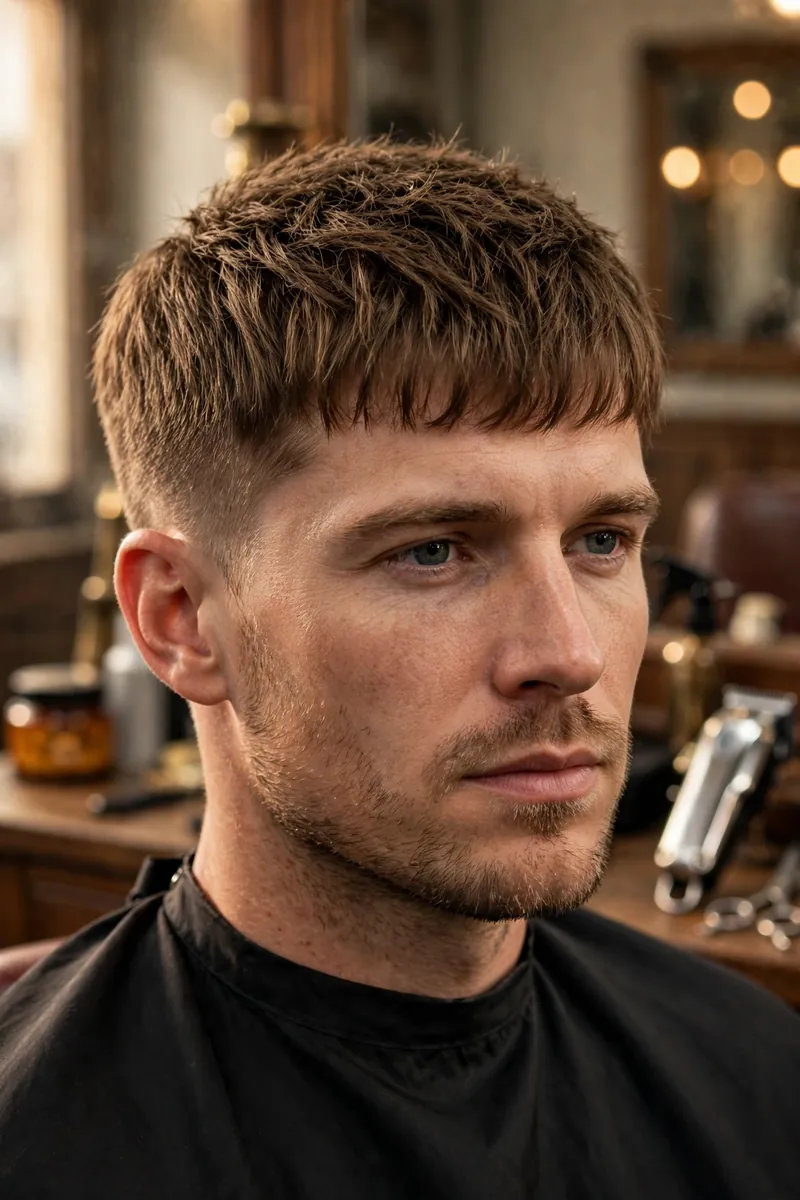
The benchmark. A clean 2-inch textured top, a straight-across fringe with soft point-cut ends, and neatly tapered sides. Nothing extreme — just sharp and balanced, working as well in an office as on a night out. If you’re trying the crop for the first time, start here. It suits the widest range of face shapes and hair types.
2. Textured French Crop
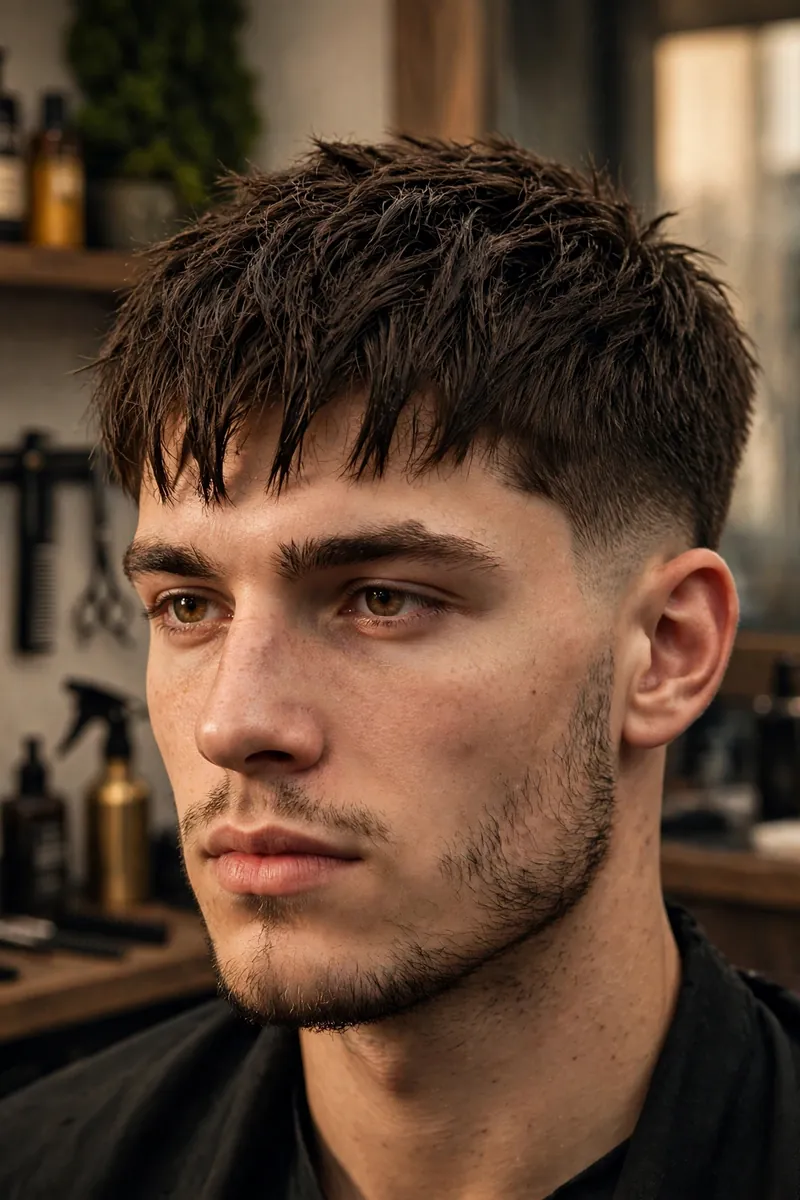
The modern standard you see all over social media. The top is heavily point-cut for piece-y separation and styled forward with matte product. It adds visual volume, making it brilliant for fine or thinning hair. Ask your barber for “maximum texture on top” and style with a small amount of matte clay.
3. French Crop Fade
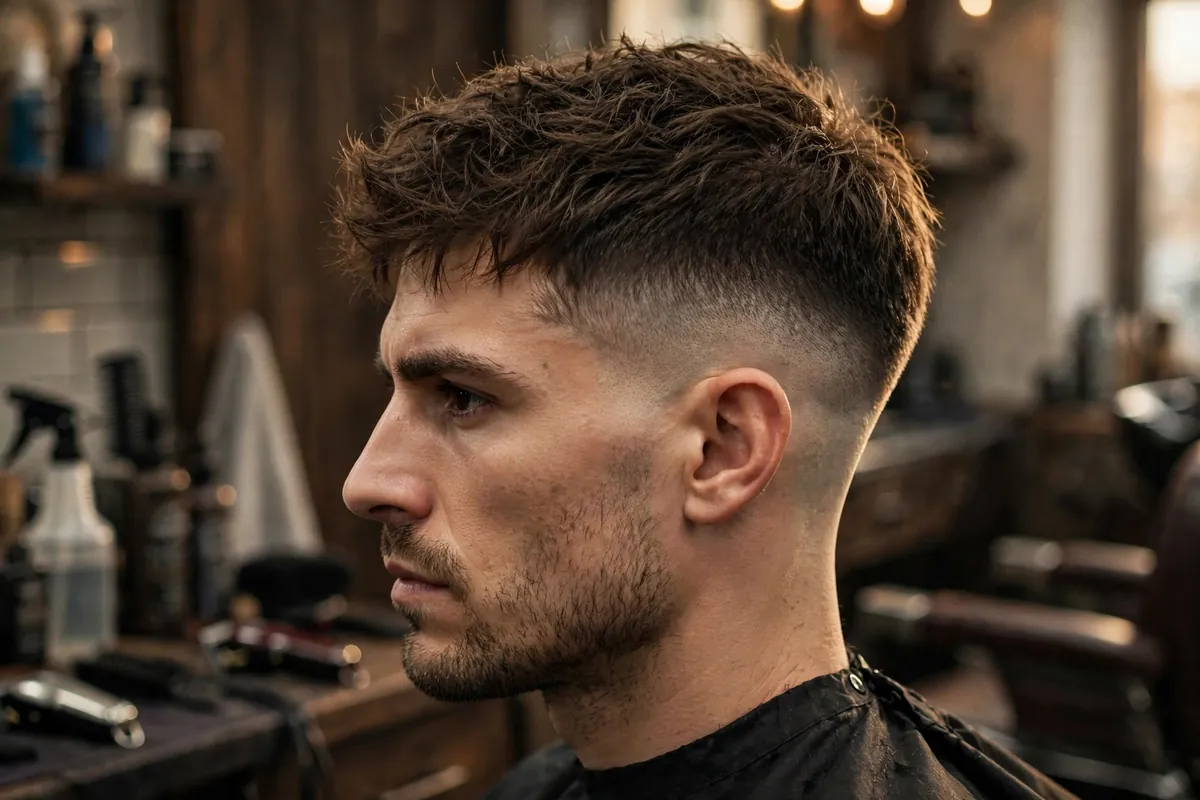
The classic crop paired with a proper fade — low, mid, or high. The contrast between the longer top and tight sides gives it edge. A mid fade is the sweet spot: modern enough to look sharp, low enough to grow out cleanly. My most requested combination right now.
4. Curly French Crop
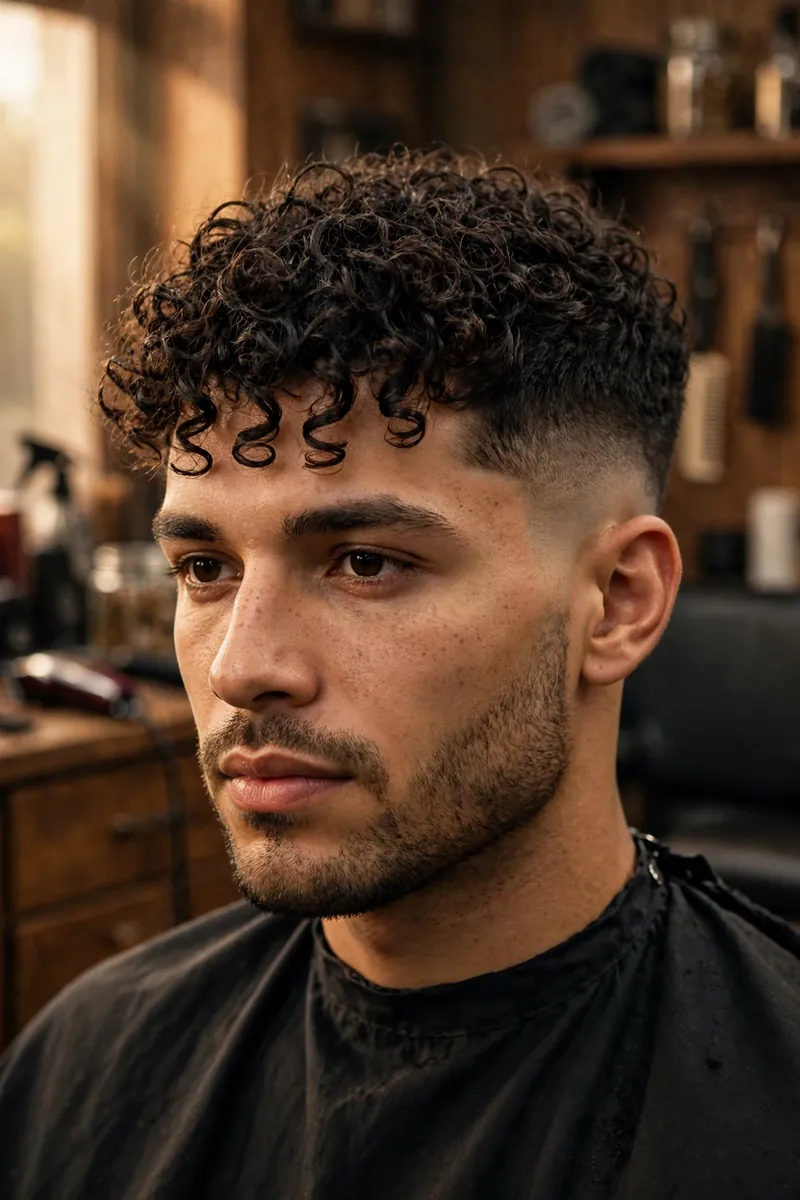
Curly hair and the crop are a natural match. Curls fall forward and create built-in texture that straight hair needs product to achieve. Keep the top at 2-3 inches so curls can form, keep the sides faded or tapered, and use curl cream rather than heavy wax for definition without crunch.
5. Long Fringe French Crop
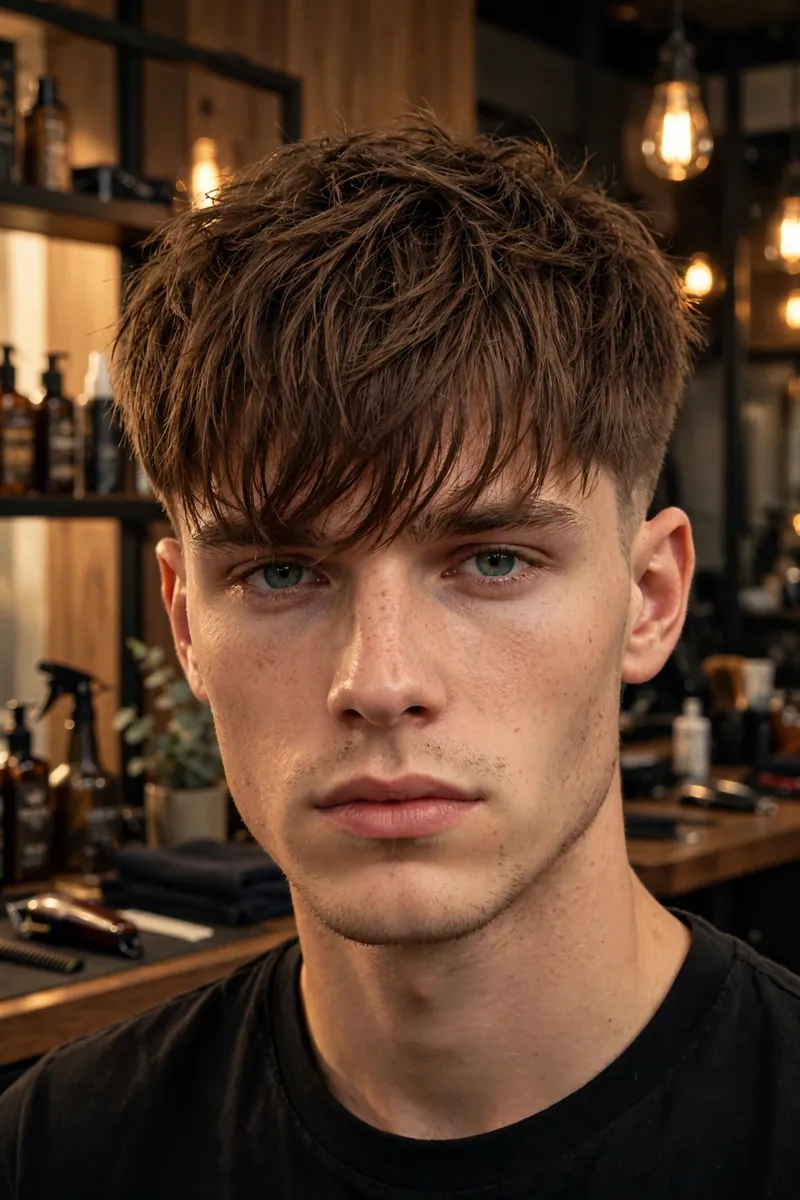
The fringe is left longer, falling over the forehead toward the eyebrows. Wear it forward and heavy, sweep it aside, or push it up for volume. It needs trims to stay out of your eyes, but the payoff is a high-fashion look that stands out from every standard short back and sides.
6. French Crop with Beard
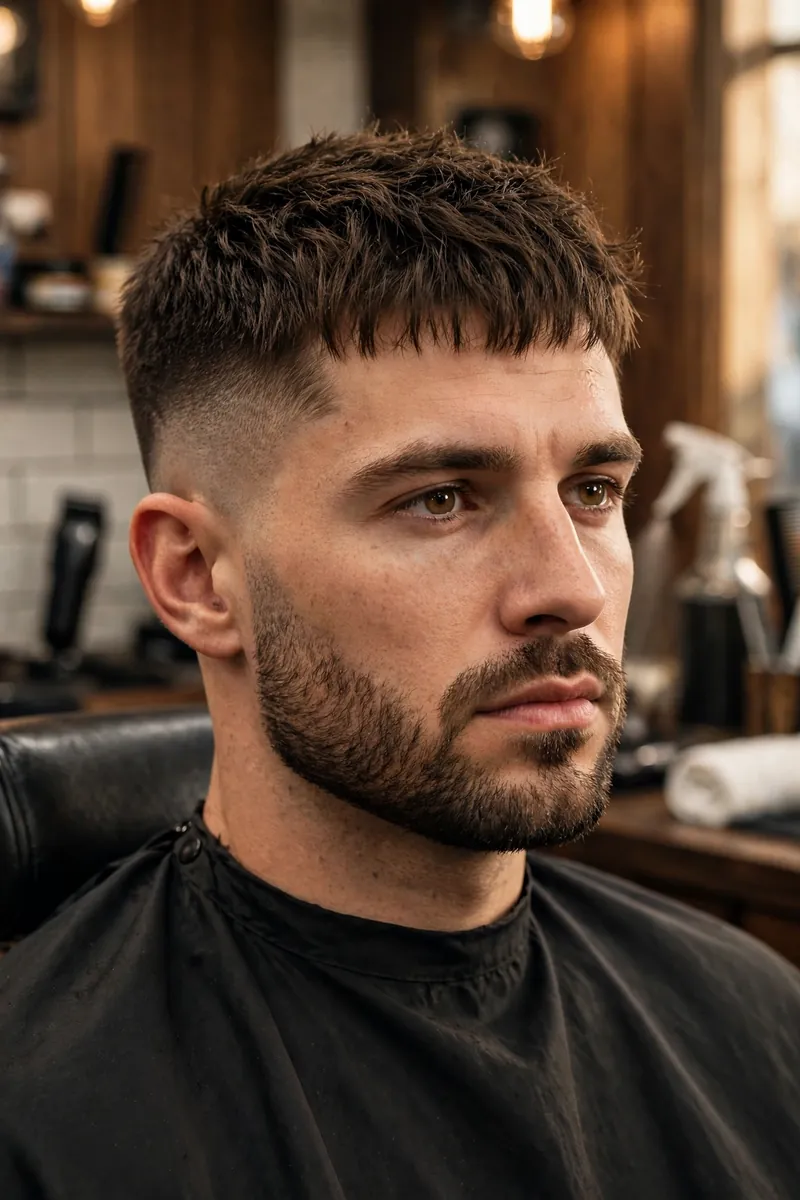
A classic pairing: the short, structured cut balances perfectly against facial hair. Keep the sides tight and let the beard do the talking, or fade the sideburns into the beard for a seamless blend. A textured crop with a short boxed beard is one of the sharpest looks a man can wear — just keep the beard neckline clean.
7. Skin Fade French Crop
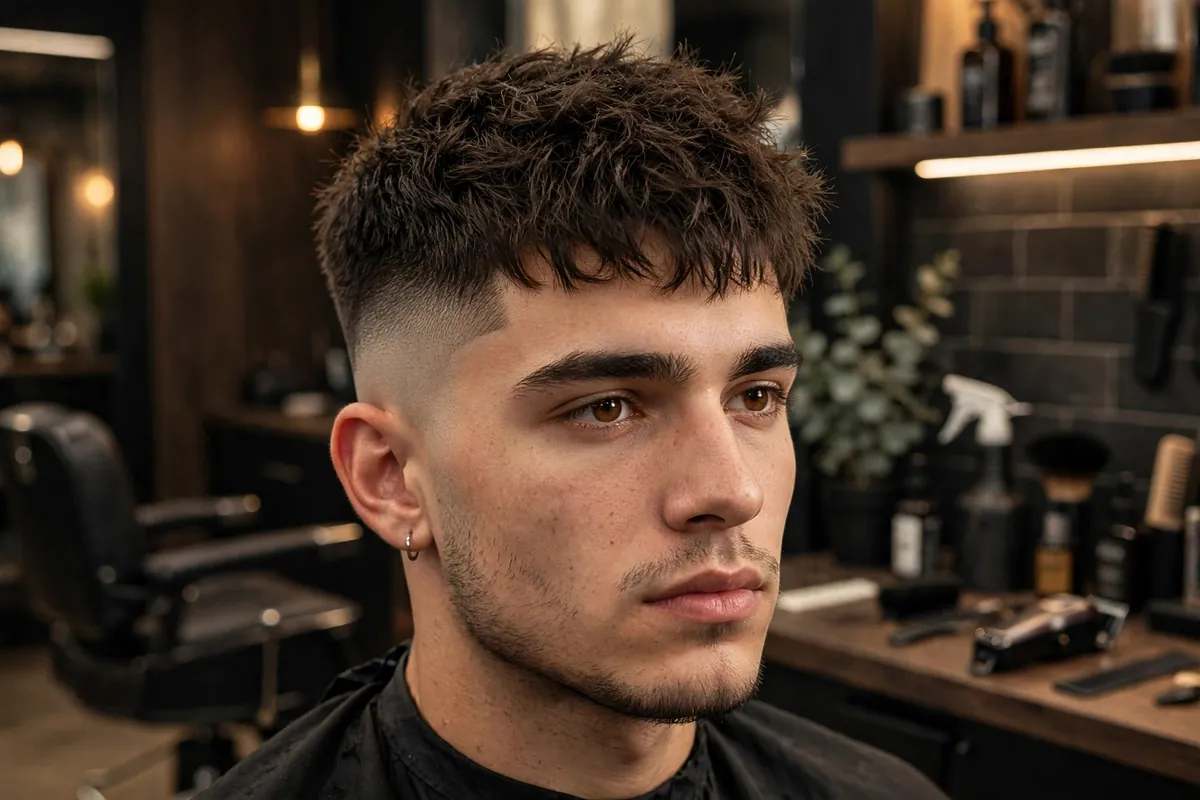
Sides taken all the way to skin for maximum contrast with the textured top. High-impact and unapologetically modern. The trade-off is maintenance — a skin fade loses its edge after two weeks, so budget for a tidy-up every 2-3 weeks. Pair with a crisp lineup for the full effect.
8. Messy French Crop
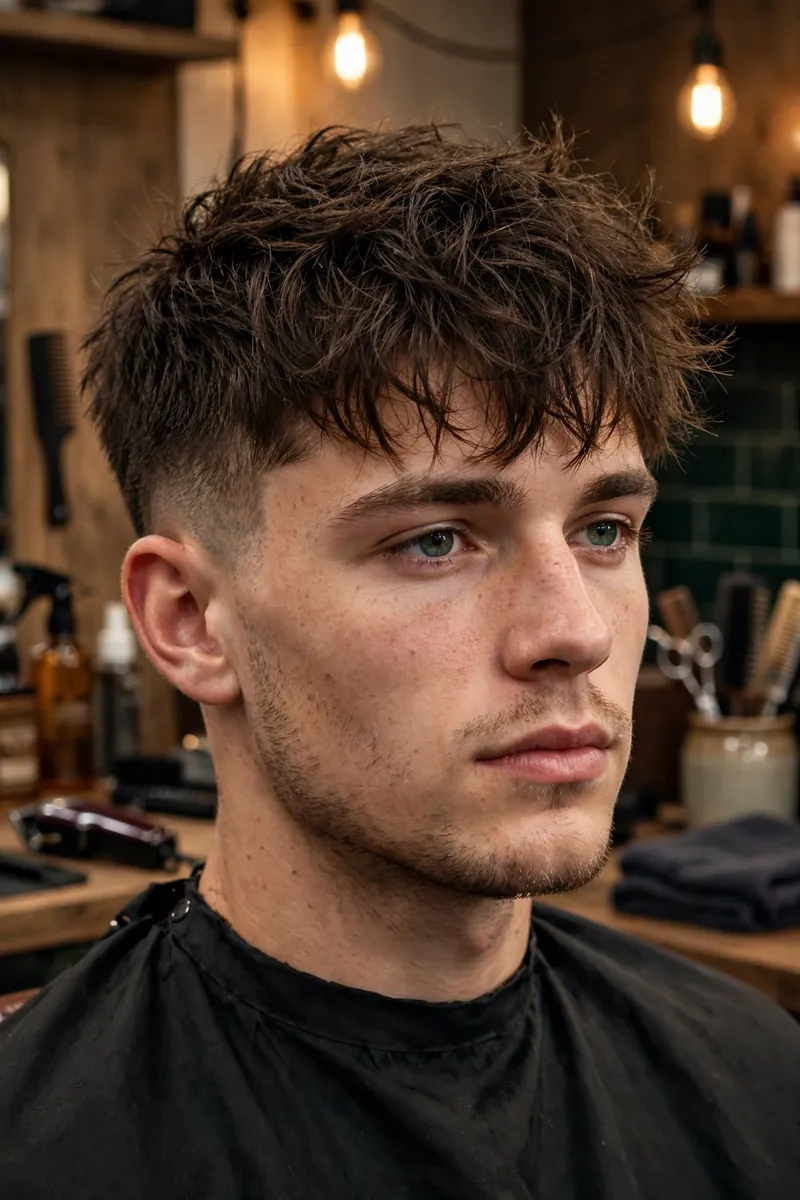
The “I woke up like this” version — deliberately tousled and full of movement. The top is cut with heavy texture and styled forward with fingers and a touch of matte product. It’s the lowest-maintenance crop because messy is the point. Ideal for wavy or thick hair and guys who won’t spend more than two minutes styling.
9. Disconnected French Crop
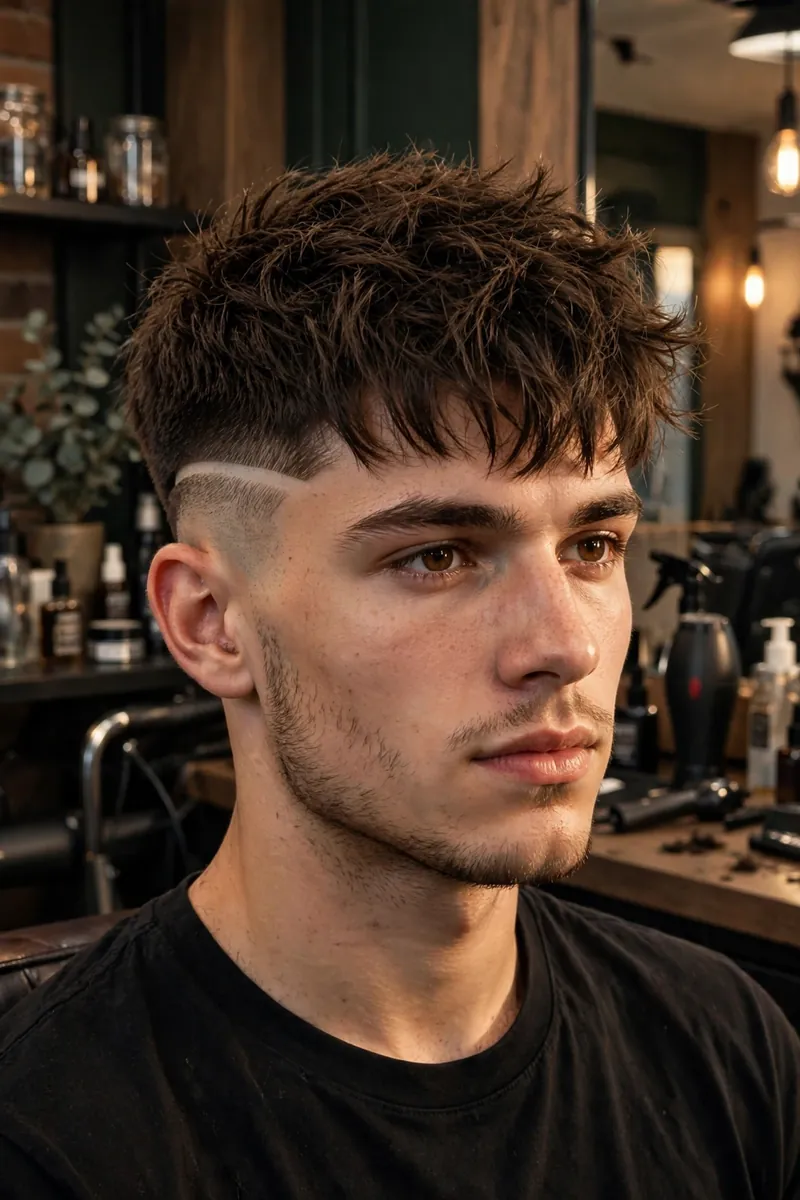
Top and sides deliberately separated with no blend — a sharp disconnect where long meets short. Dramatic and fashion-forward. The disconnect makes the top look even fuller, so it’s smart for finer hair that needs maximum visual density up top.
10. French Crop with Line Up
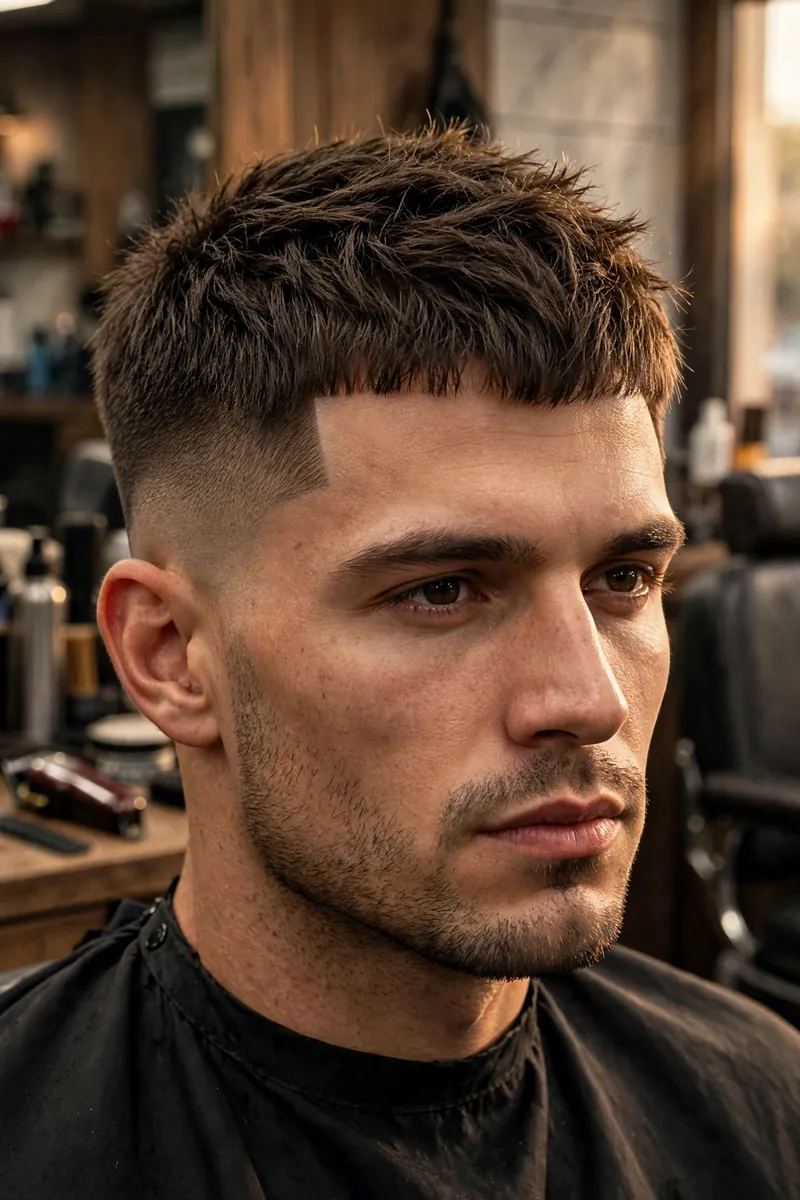
Crisp, geometric edges along the hairline and temples take the crop from casual to razor-sharp. The lineup frames the face and makes the cut look precise. Looks especially clean on coarse or curly hair, where the sharp edge contrasts beautifully with soft texture. Needs edging every 1-2 weeks.
11. French Crop for Straight Hair
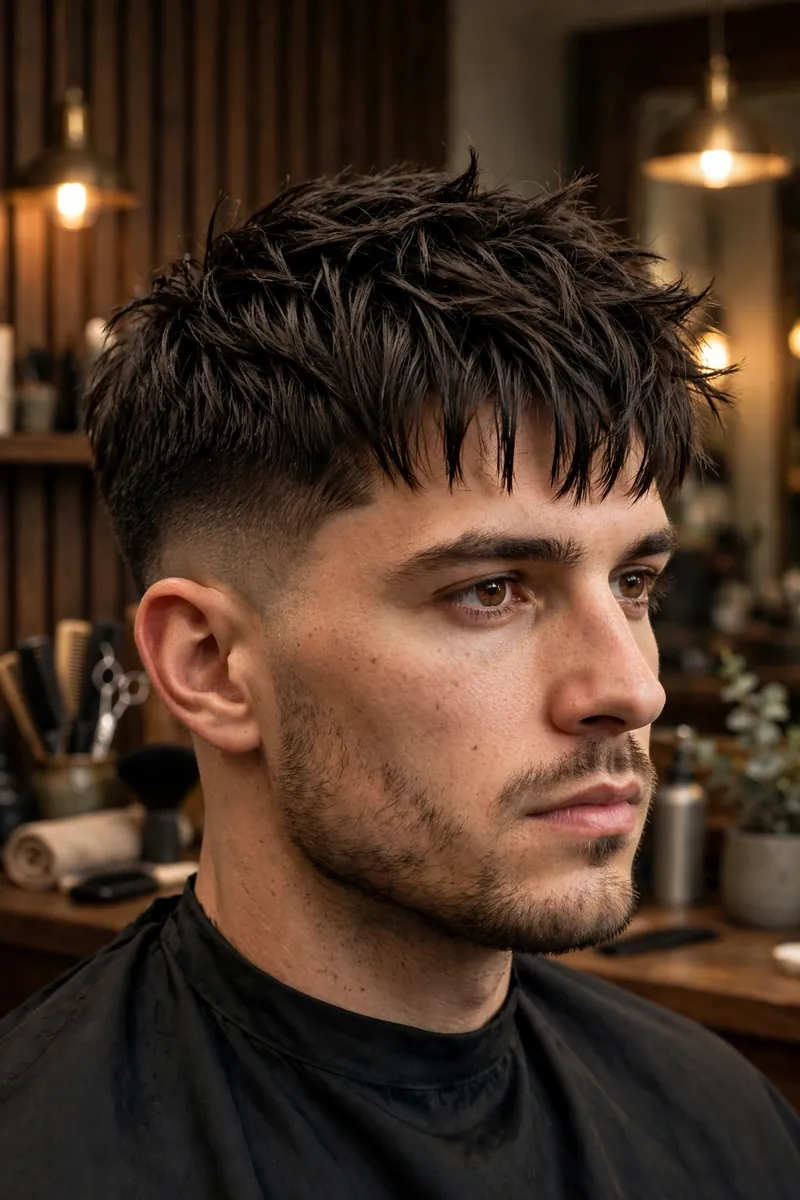
Straight hair can look flat in a crop, so manufacture texture: ask for aggressive point-cutting and layers, then style with matte clay, twisting small sections with your fingertips. A blow dryer helps enormously — dry the fringe forward while lifting at the roots. Done right, straight hair gives the cleanest, most defined crop.
12. French Crop for Wavy Hair
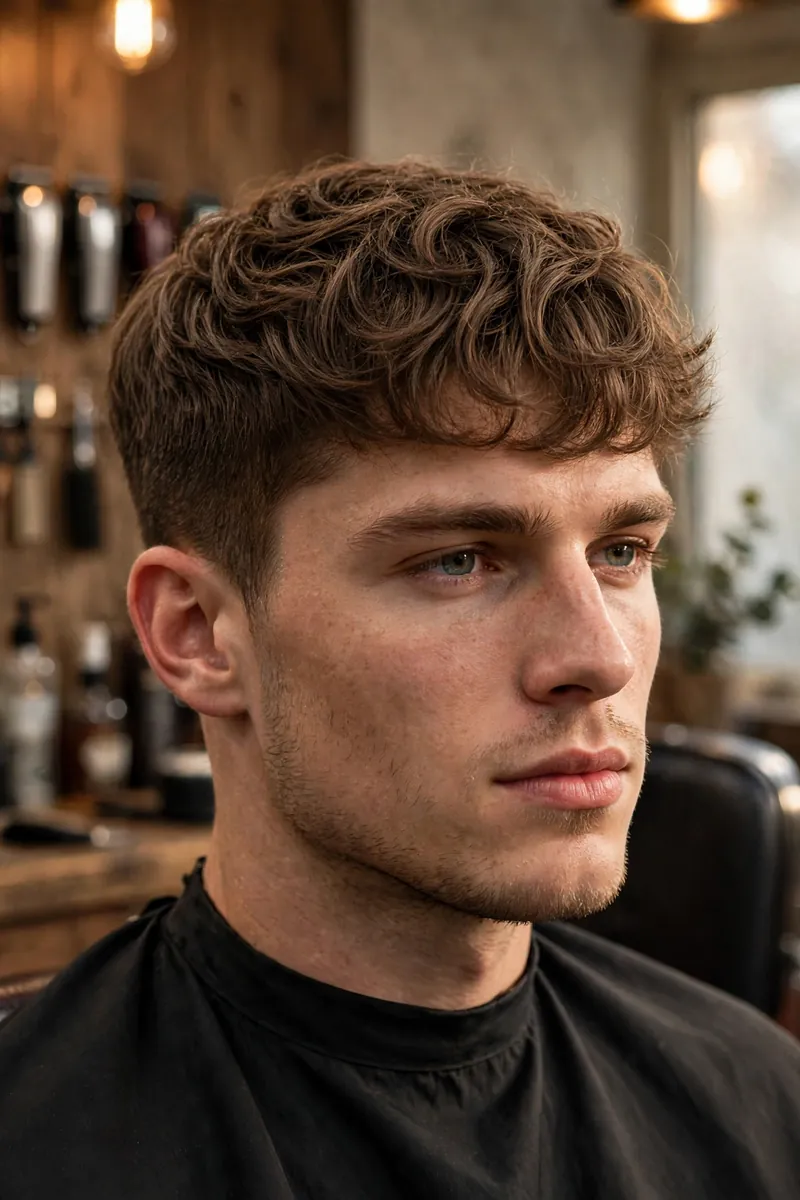
Wavy hair may be the best fit of all — the wave pattern does half the styling for you. Keep the top slightly longer so waves can form, and style with light cream or sea salt spray rather than heavy product. Scrunch, don’t rake: enhance the wave instead of flattening it.
13. Short French Crop
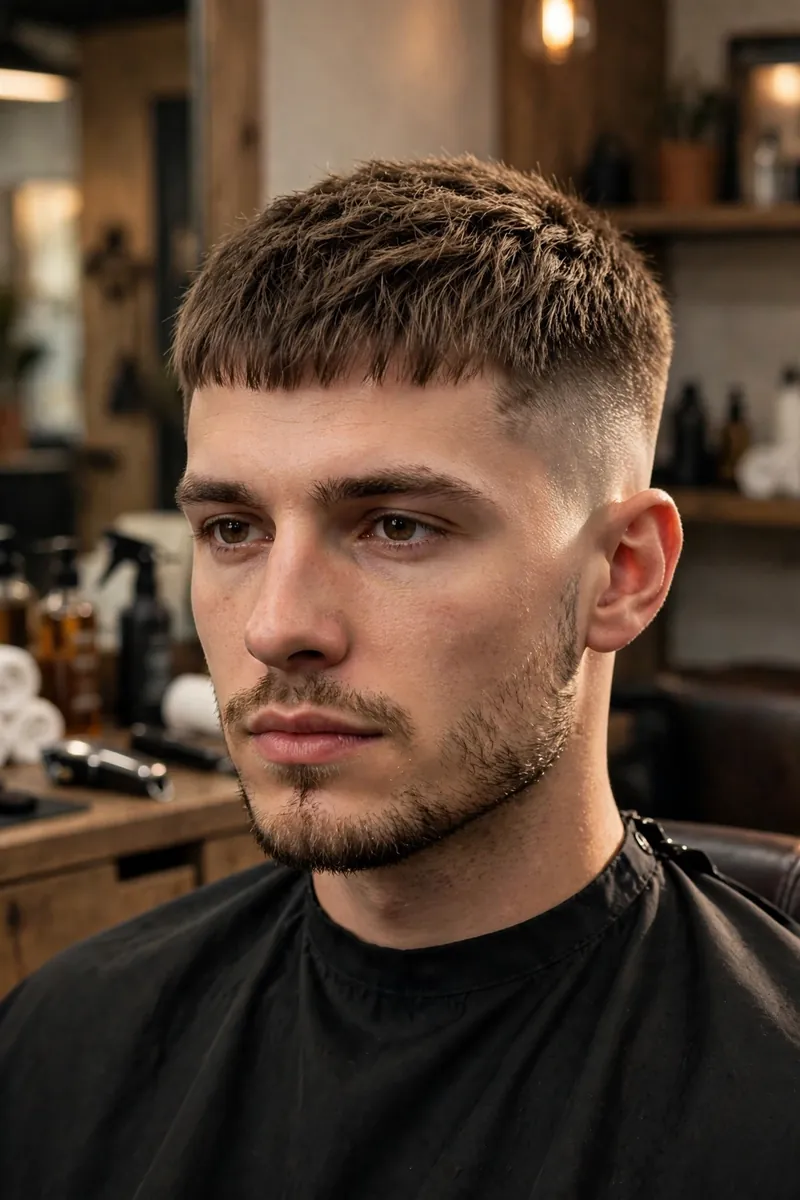
The minimalist take: a short textured top around an inch, short fringe, faded sides. Clean, masculine, and about as low-maintenance as a stylish cut gets. Great for hot climates and active guys, and it grows out very forgivingly.
14. French Crop with Hard Part
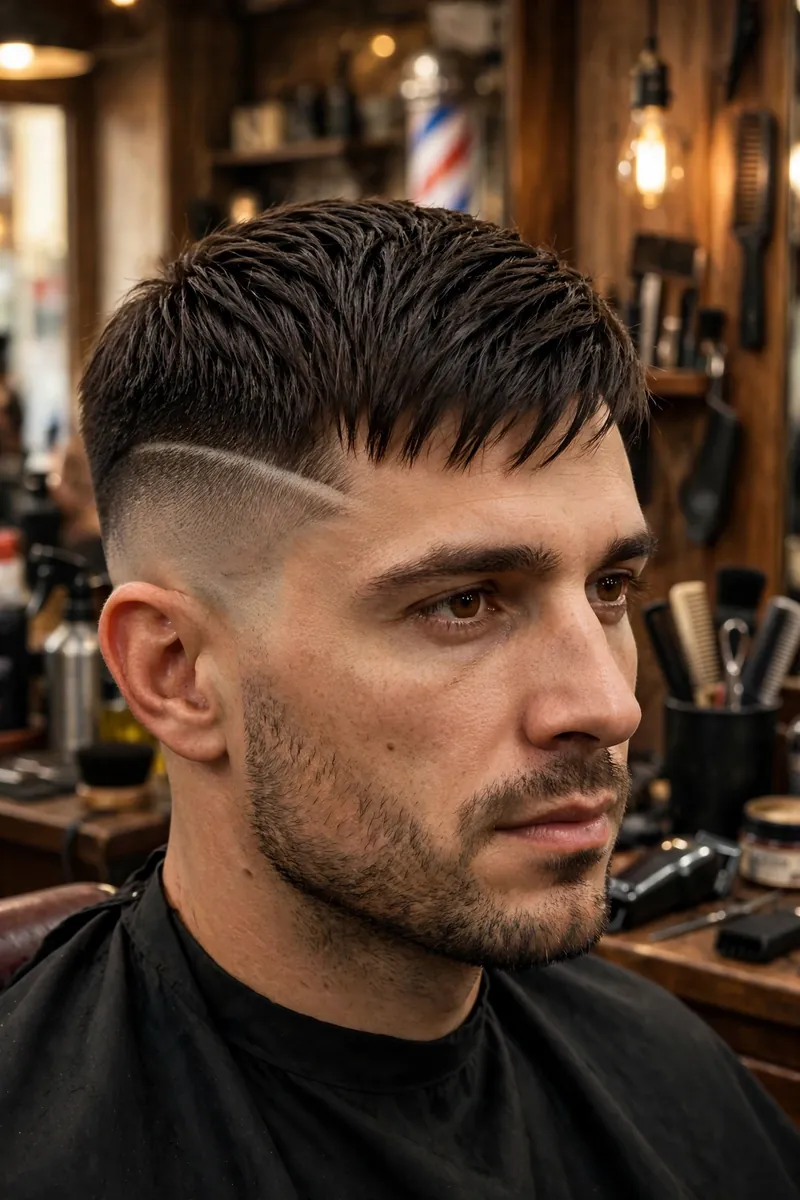
A shaved hard-part line adds structure and classic barbering detail to the modern cut. It gives the style clear direction and makes the top look intentionally placed. It needs re-cutting every couple of weeks as it grows in. Best on straight to wavy hair where the line stays visible.
15. Tapered French Crop
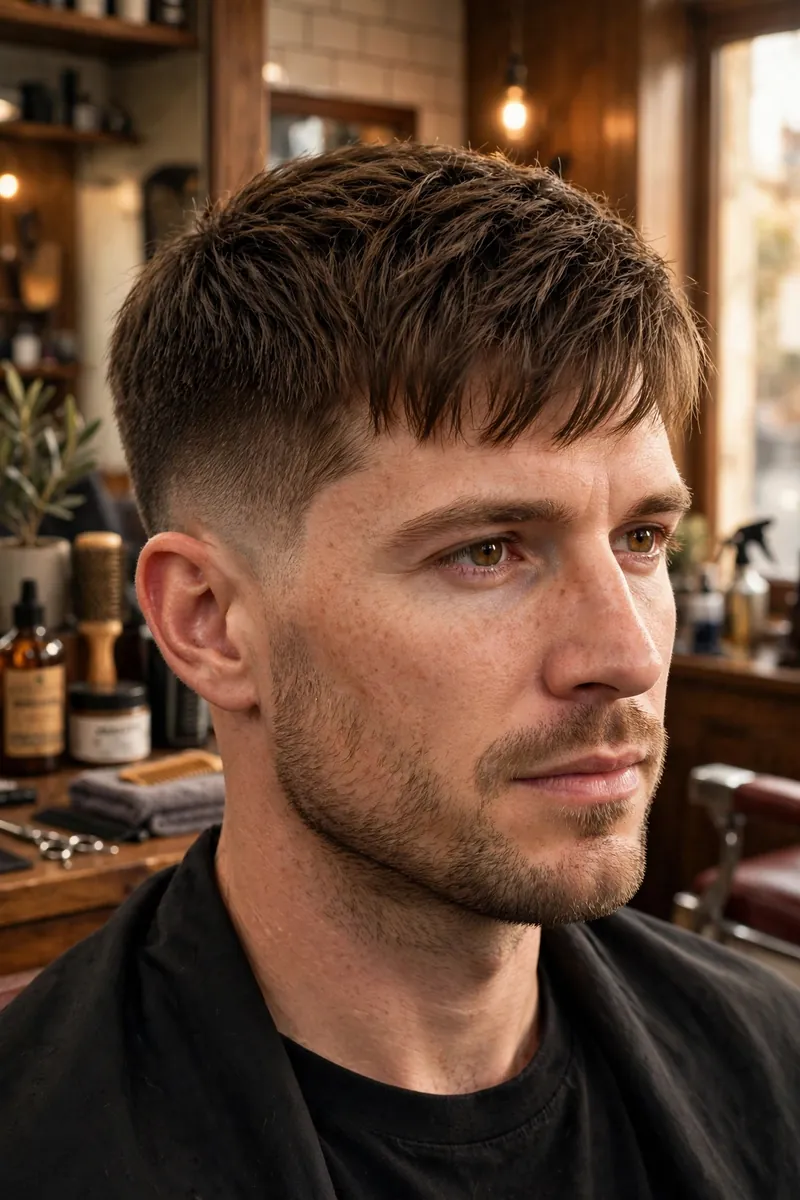
Instead of a full fade, the sides taper gradually without going to skin. Subtler and more professional — office-friendly and easier to grow out. If you like the crop but work somewhere conservative, this is your version.
16. French Crop with Mid Fade
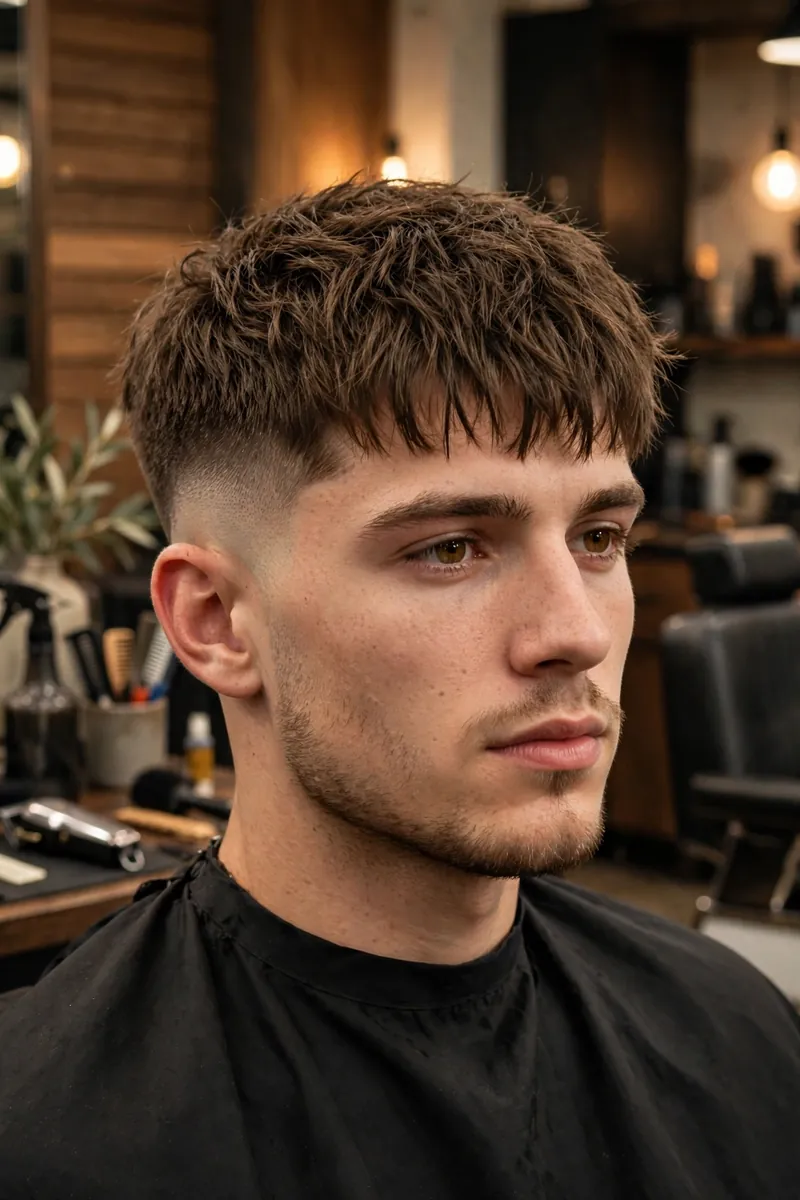
The mid fade starts around the temples — the most versatile height for the crop. Bold enough to look modern, balanced enough for most face shapes, and it grows out more gracefully than a high or skin fade. Unsure which fade to get? Tell your barber “mid fade.”
17. French Crop for Thick Hair
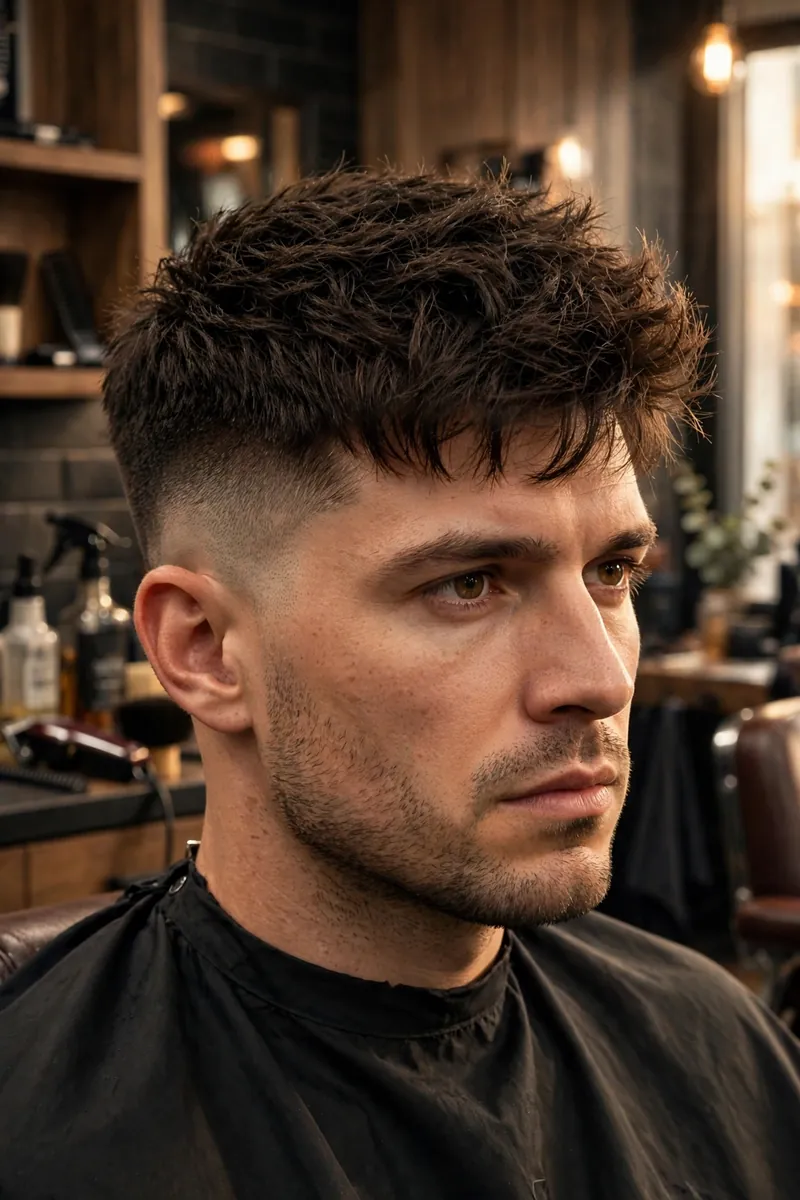
Thick hair gives incredible volume but needs serious texturizing to avoid the helmet look. Ask for thinning through the top, keep the sides tight, and make the fringe textured rather than blunt. Style with lightweight matte product — heavy waxes only add to the weight problem.
18. French Crop for Receding Hairline
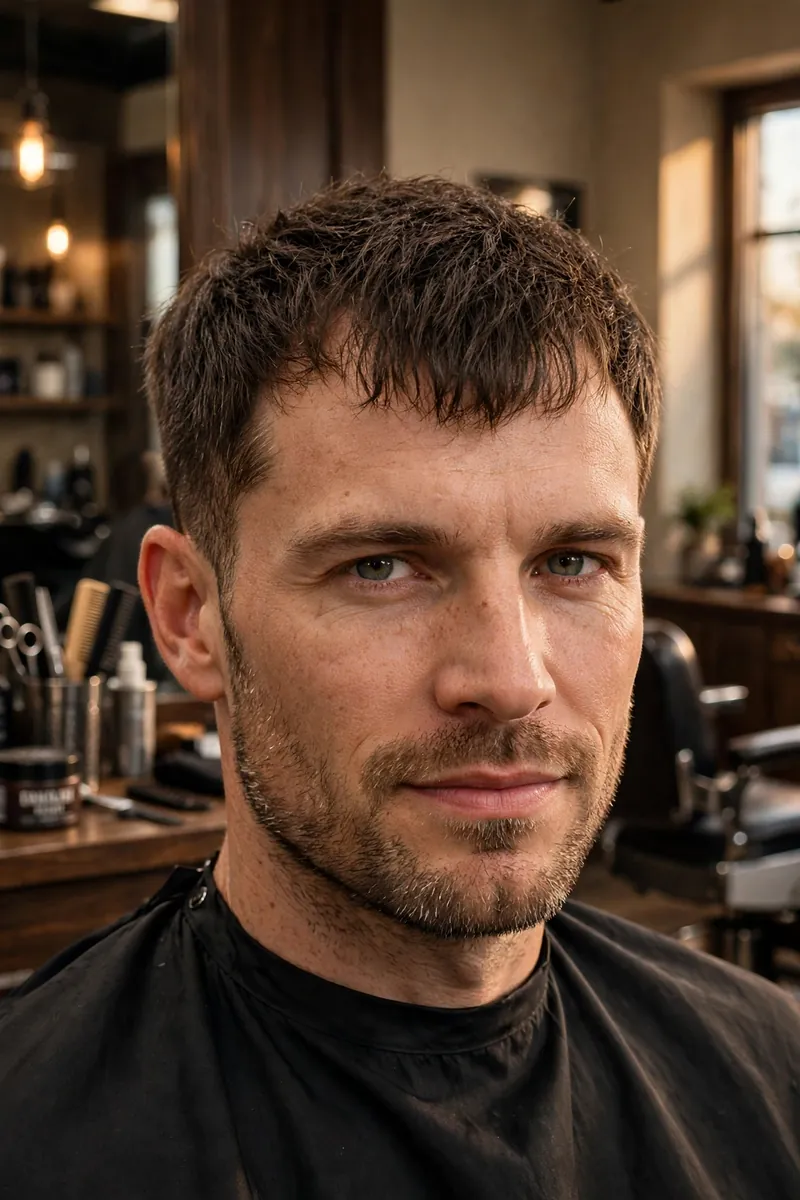
The crop’s secret superpower. The forward fringe covers the temples and hairline, the textured top creates the illusion of density, and the short length minimizes contrast between thinning and thick areas. Keep the fringe textured and forward — never slicked back. A confident, stylish answer to hair loss.
How to Ask Your Barber
Speak your barber’s language: “I’d like a french crop textured top around 2 inches, fringe worn forward and textured, with a [taper / mid fade / skin fade] on the sides.”
Mention the details: top length in inches, fringe style (straight, textured, or long and choppy), and fade height. Ask for point-cutting through the top — that’s what separates a french crop from a flat, lifeless cut. For the neckline, tapered grows out softer; blocked looks sharper but shows growth faster.
Bring a photo. It’s the single best thing you can do find 2-3 photos of the exact variation you want. It eliminates guesswork, and a good barber will tell you honestly if it suits your hair type.
How to Style a French Crop
Three minutes, five steps:
- Start with towel-dried hair. Damp, not wet. Thick or stubborn hair benefits from a quick blow-dry forward first.
- Use a pea-sized amount of matte product. Matte clay or light matte paste — warm it fully between your palms.
- Work it through forward. Push from back to front with your fingertips, reaching the roots for hold.
- Define the fringe. Pinch and twist small sections for a piece-y finish, or tousle for the messy look.
- Leave it alone. Every touch breaks down the hold.
Maintenance: trim every 3-4 weeks to keep the shape; skin fades need attention every 2-3 weeks. Wash product out nightly — sleeping in clay or wax causes buildup and dull hair.
Who Suits the French Crop?
Almost everyone. It suits oval faces perfectly. On round faces, keep the fringe textured and sides tight to add the illusion of length. On square faces, the soft fringe balances a strong jawline. On oblong faces, avoid height on top — keep the fringe forward and flat to avoid elongating the face.
It adapts to straight, wavy, curly, thick, and fine hair with the right cutting technique. It’s ideal if you want sharp looks with minimal effort, need to camouflage a receding hairline, or want a modern cut that still works professionally (stick to tapered or classic versions for conservative offices).
textured fringe haircut styles
FAQs
How long does a french crop last between cuts?
About 3-4 weeks. The shape holds well, but faded sides lose definition after 2-3 weeks. Skin fades need a tidy-up every 2-3 weeks; tapered versions stretch to 4-5.
Is the french crop good for thin hair?
Yes — one of the best cuts for it. The textured top creates the illusion of volume, and the short length minimizes contrast between thin and thick areas. Ask for heavy texture and use a matte volumizing product.
Can you get a french crop with curly hair?
Absolutely. Keep the top at 2-3 inches so curls form, fade or taper the sides, and let the fringe fall naturally forward. Use curl cream instead of wax for definition without crunch.
What’s the difference between a french crop and a fringe haircut?
“Fringe haircut” is the broad family — any cut with hair over the forehead. The french crop is one specific member: short textured top, forward fringe, faded or tapered sides.
Does the french crop suit a big forehead?
With the right fringe, yes. A longer textured fringe falling over the forehead balances it nicely. Avoid a very short, high fringe, which draws attention to the forehead.
How do I style a french crop without product?
Water and a blow dryer get you surprisingly far — dry the fringe forward while lifting at the roots. For extra texture without residue, try a lightweight sea salt spray.
Is the french crop still in style in 2026?
Very much so. It’s moved from trend to modern classic — a permanent part of the barbering menu alongside the fade and side part. The textured and messy versions are currently the most popular.
Final Thoughts
The french crop earned its place: it suits almost everyone, takes minutes to style, works from boardrooms to barbershops, and disguises a receding hairline while looking intentional. Whether you go classic and clean or textured and messy, it’s one of the most versatile cuts in modern barbering.
Pick your variation, save a couple of photos, and book the chair. With the right cut and a simple matte-product routine, you’ll look sharp every morning.

Ryan Carter is a men’s grooming writer who covers haircuts, hairstyles, beard care, and barbering trends. He shares practical style advice and grooming tips to help men look sharp and stay confident.