45+ Best Modern Mullet Haircuts for Men Styles, Cuts & Care 2026
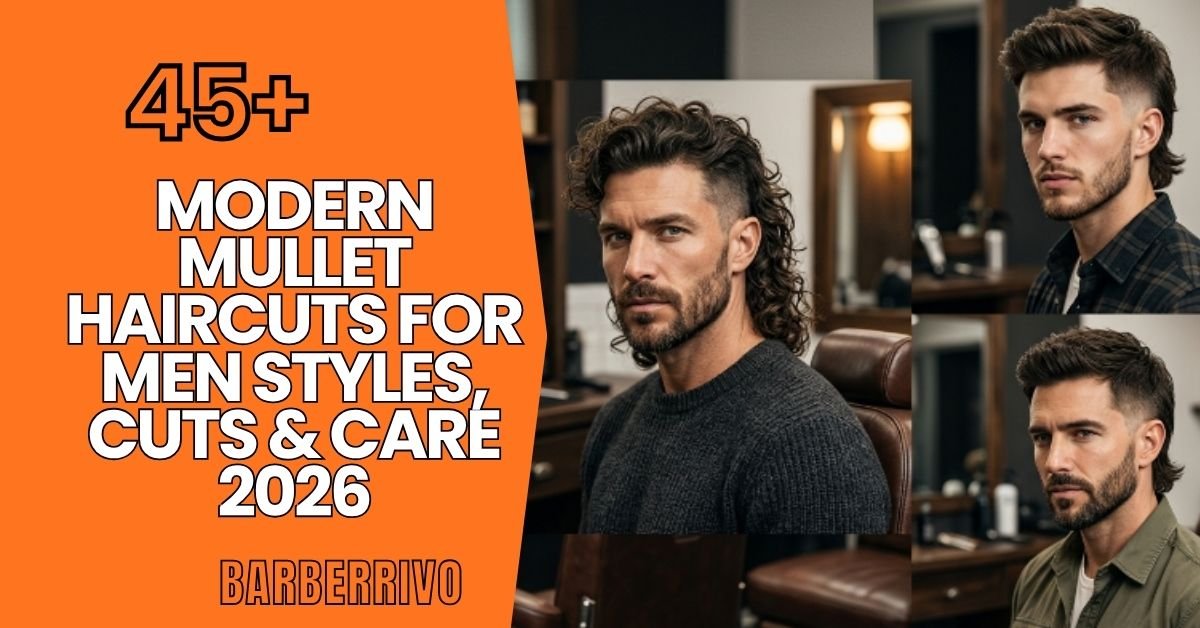
The modern mullet haircut isn’t some fringe trend anymore. It’s everywhere. Walk into any barbershop in 2026 and you’ll hear guys asking for a mullet haircut for men that looks sharp, not stuck in 1985. This cut has grown up.
It’s shed its bad reputation and turned into one of the most trendy mullet styles on the planet, thanks to a mix of textured top, faded sides, and just enough length in the back to feel rebellious.
So what changed? Simple. Barbers stopped treating the mullet like a joke and started treating it like a canvas. Add a skin fade mullet here, a little curly mullet texture there, and suddenly you’ve got a haircut that works for office guys, skaters, and everyone in between.
This guide breaks down over 45 men’s mullet hairstyles, walks you through picking the right one for your face shape and hair type, and shows you exactly how to style and maintain it without losing your mind (or your shape) between trims.
Whether you want a classic mullet with a bit of an edge or a full-blown edgy men’s haircut that turns heads, you’ll find it here. Let’s get into it.
The Best Modern Mullet Styles for Men in 2026
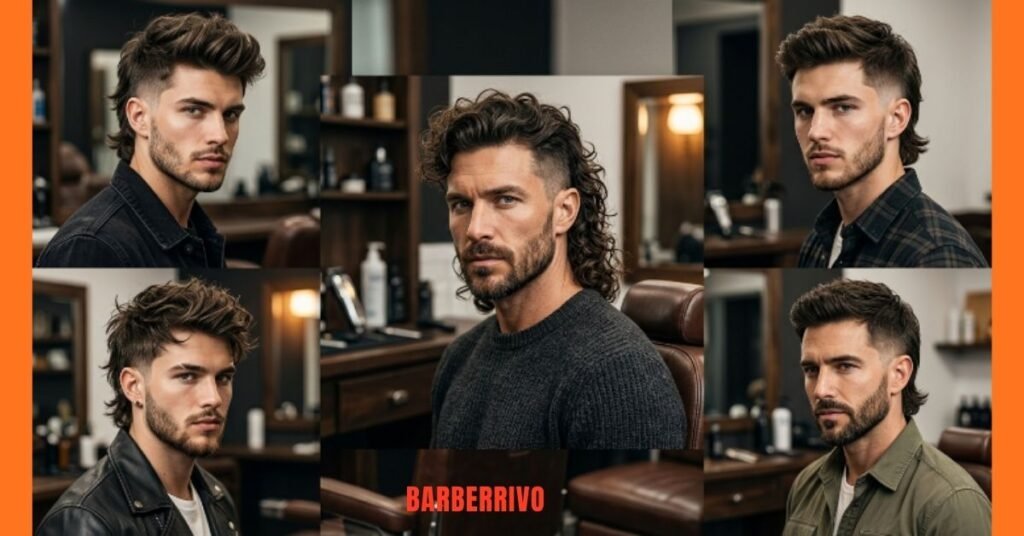
Picking one modern mullet style out of dozens feels a little like choosing a favorite song. It depends on your mood, your hair, and honestly, how much attention you want. Some of these modern hairstyles for men lean quiet and low-key. Others practically shout. Either way, there’s a version here that will fit your face, your lifestyle, and your patience for maintenance.
Below, you’ll find every major variation making waves right now, from the stylish mullet shapes barbers keep getting asked for, to niche cuts that are only just catching on outside of TikTok. Read through a few, picture them on your own head, and bring your favorite as a reference photo to your next barber consultation.
Classic Mullet
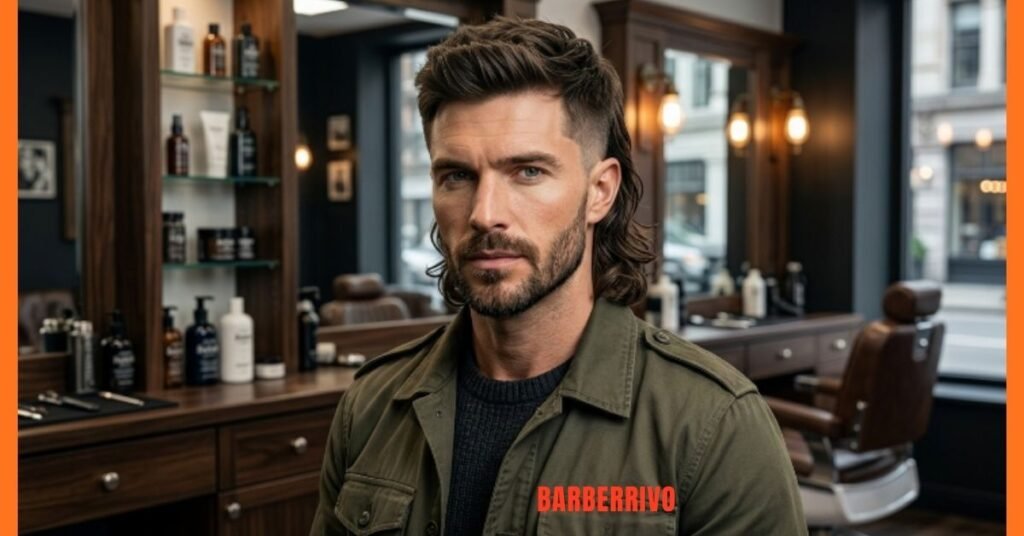
The classic mullet is where it all started, and it still holds up. Short on the sides, longer in the back, no fuss. This version skips heavy fades and sticks with a simple trim, which makes it one of the more low maintenance hairstyle options on this list. It suits guys who want the mullet silhouette without chasing every new trend. Pair it with straight or slightly wavy hair for the cleanest look, and expect fewer trips to the barber than the flashier cuts further down this list.
Modern Mullet

The modern mullet takes that old shape and gives it a glow-up. Think blended fades instead of a blunt line, and a textured top that actually moves instead of sitting flat. Barbers use thinning shears here to keep things soft rather than choppy. It’s the most requested version of the cut in 2026, largely because it looks intentional. You can dress it up with a side part or leave it messy for an off-duty vibe, and it works with almost any hair type.
Wolf Cut

The wolf cut blends shaggy mullet energy with heavy layering on top, creating a wild, textured shape that looks like it took zero effort (even though it usually took a skilled hand). This one leans into volume, especially through the crown, and works best with wavy hair men or natural curl. If you’ve seen influencers with big, tousled hair that flares out at the ends, that’s likely a wolf cut. It’s bold, it’s a little chaotic, and it photographs incredibly well.
Shag Mullet
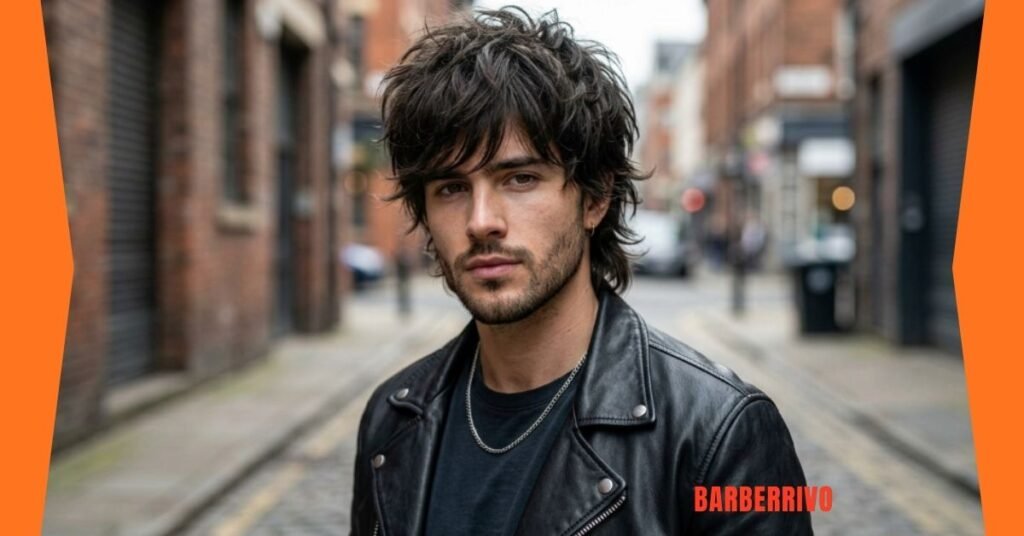
Close cousin to the wolf cut, the shag mullet relies on choppy, uneven layers all over the head. The effect is deliberately messy, like you just woke up looking good. Barbers achieve this with point cutting, which creates soft, feathered ends instead of blunt lines. This one pairs beautifully with medium-length hair and adds serious hair volume without needing much product.
Curtain Mullet
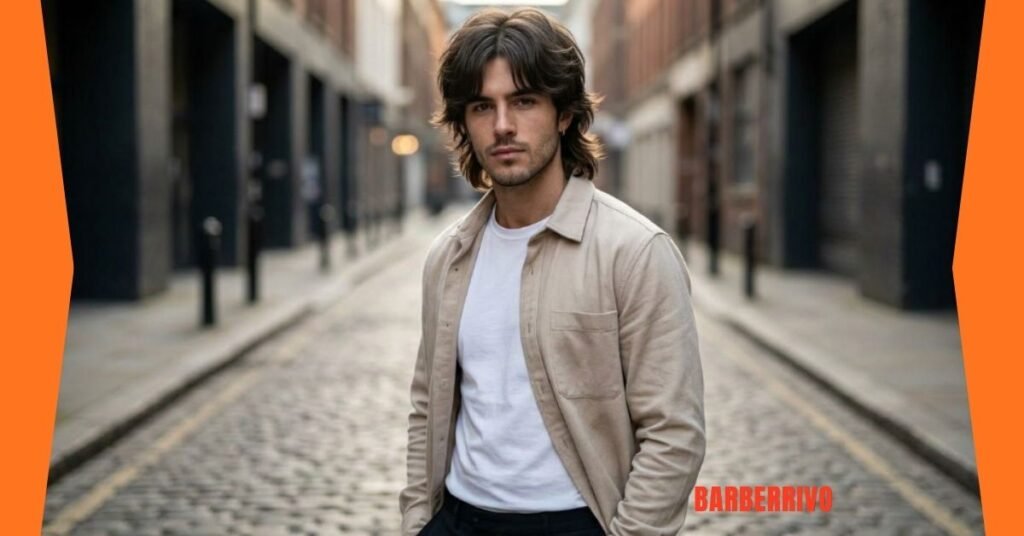
The curtain mullet brings back that early-2000s middle-part fringe and marries it to a longer back section. The front pieces frame your face like actual curtains, softening sharp features and adding a boyish charm. It works particularly well on guys with round or oval faces, since the parted fringe draws the eye outward. Style it with a light sea salt spray for texture that doesn’t feel stiff.
Burst Fade Mullet
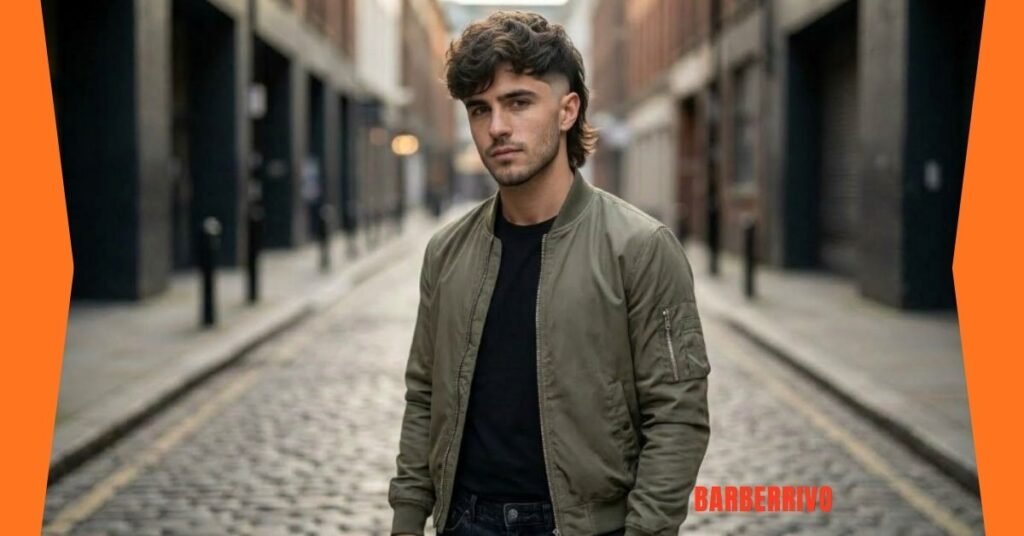
Here’s where things get technical. The burst fade mullet curves the fade around the ear in a semicircle rather than cutting straight across, which creates a rounded, almost explosive shape at the temple. It’s a favorite among barbers who like precision work, and it looks especially sharp with curly or coily hair up top. This cut demands a skilled hand, so don’t try to DIY it.
Taper Fade Mullet
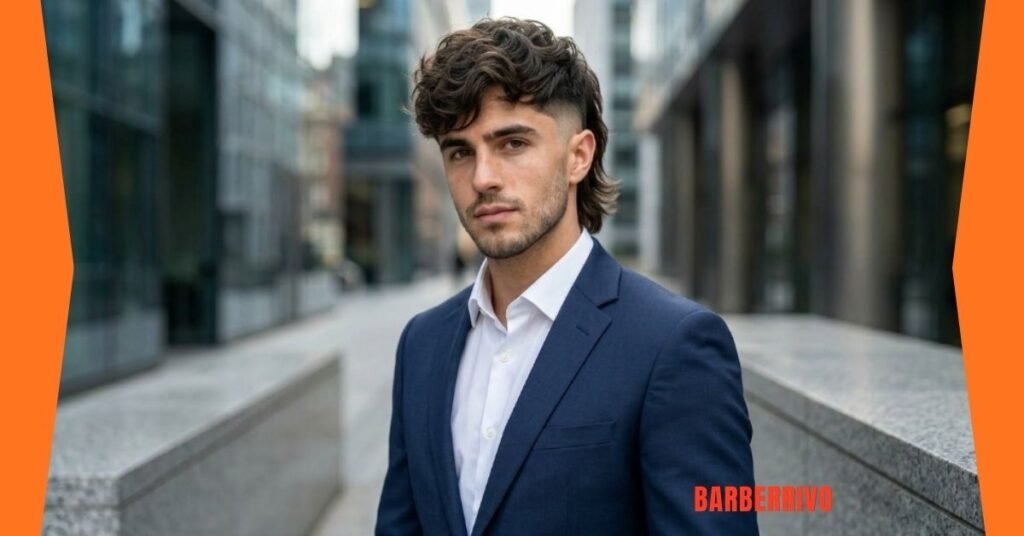
The taper fade mullet gradually shortens the hair from the crown down to the neckline, without the dramatic skin-close finish of a true fade. It’s subtle, versatile, and honestly one of the easiest cuts to grow out gracefully. If you want something that reads as professional during the week and edgy on weekends, this is a strong pick.
Skin Fade Mullet
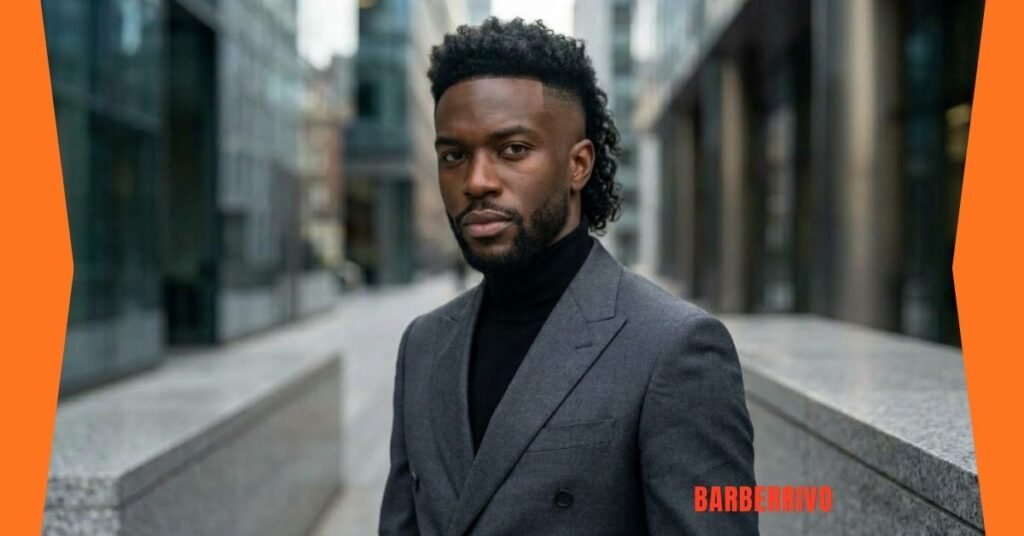
For maximum contrast, the skin fade mullet shaves the sides down to bare skin before blending into a much longer top and back. The result is dramatic. It practically demands a textured top to balance out the sharp sides, so ask your barber for extra texturizing up top. This one turns heads, no question, but it also needs more frequent trims to keep that fade crisp.
Low Taper Mullet
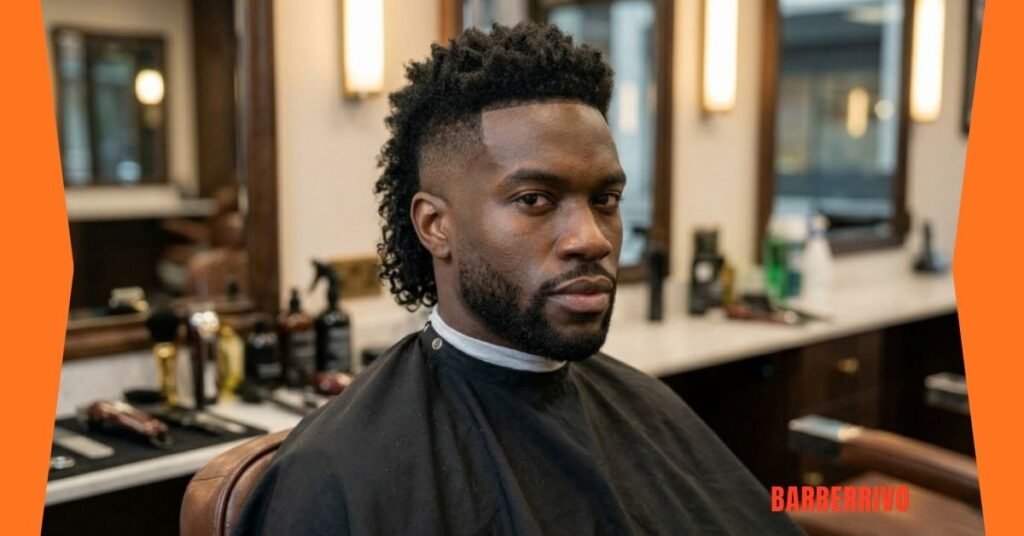
A low taper mullet keeps the fade close to the hairline, only tapering right above the ears and neck. It’s the most conservative fade option on this list, which makes it a smart pick for workplaces with stricter grooming policies. You still get that mullet flair up top, just without the loud statement on the sides.
Mid Taper Mullet
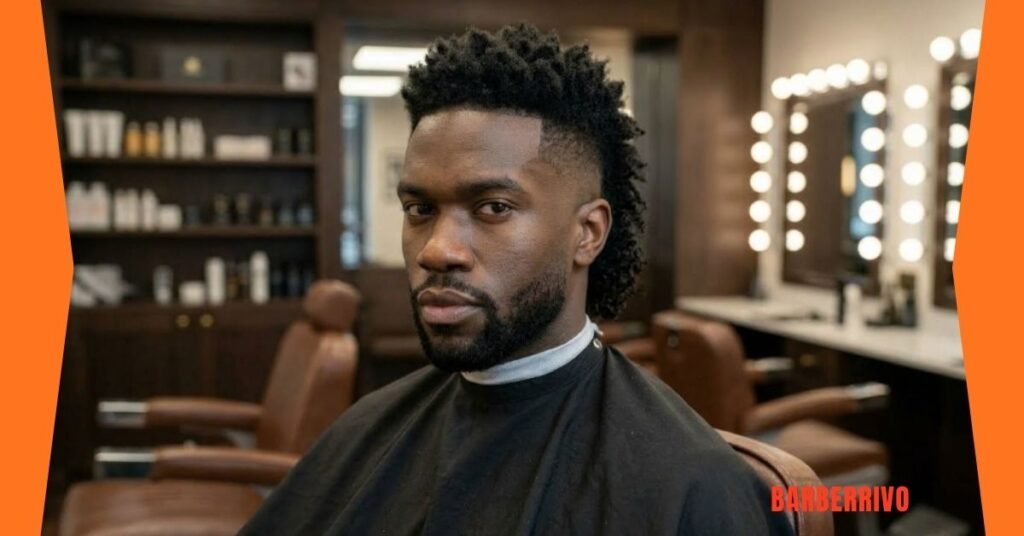
Sitting right between low and high, the mid taper mullet starts blending around the temple. It balances edge and professionalism nicely, giving you visible contrast without going full skin fade. Most guys land here when they want something noticeably modern but not over-the-top.
High Taper Mullet
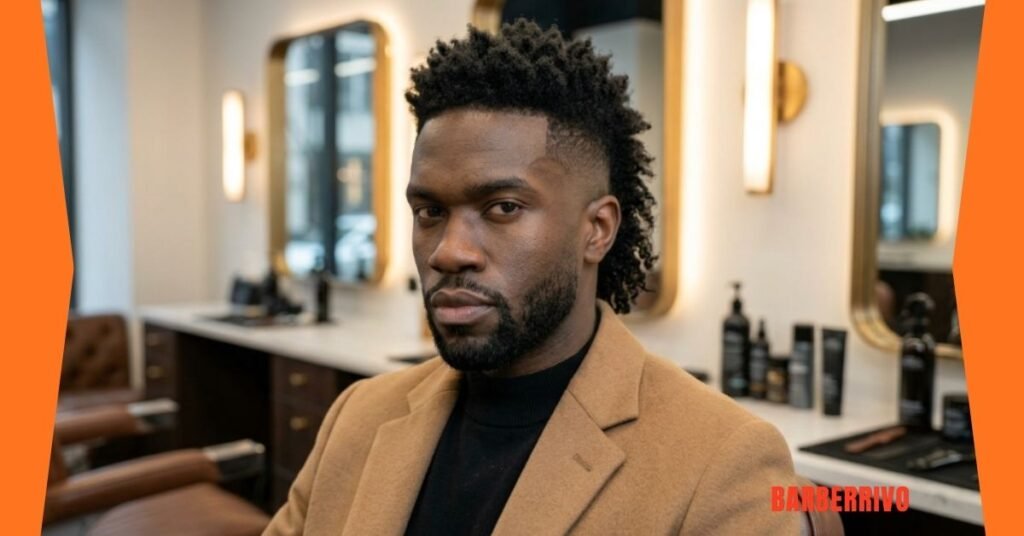
The high taper mullet pushes the fade line up near the crown, leaving a smaller area of longer hair on top. This creates dramatic contrast and a bold, structured silhouette. It suits thick hair especially well, since the shorter sides keep bulk in check while the crown holds shape and volume.
Mullet Fade

“Mullet fade” is often used as a catch-all term, but it generally describes any mullet where the sides blend smoothly into shorter lengths using clippers, rather than a hard scissor line. It’s less about a specific fade height and more about that smooth, graduated transition. Ask for this by name if you want your barber to have creative freedom with the blend.
Undercut Mullet
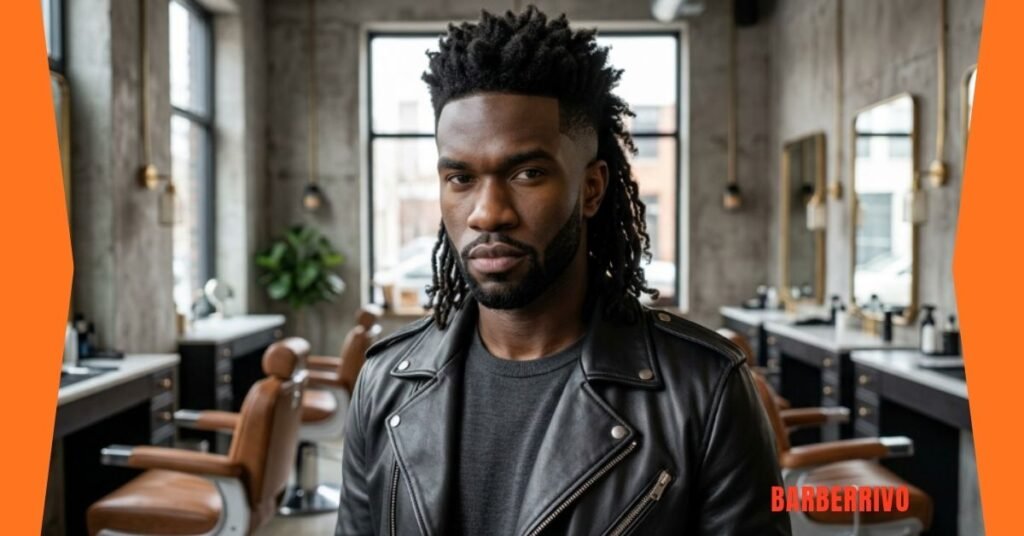
The undercut mullet shaves the sides dramatically shorter than the top, creating an abrupt, almost architectural line rather than a gradual fade. It’s a striking choice, especially with curly or voluminous hair up top, since the contrast makes the length pop even more.
Two Block Mullet

Borrowed from Korean street style, the two block mullet trims the sides and back short in one clean block, while the top stays longer and gets pushed forward or styled with soft waves. It’s neat, geometric, and popular among guys who want something structured rather than shaggy.
French Crop Mullet
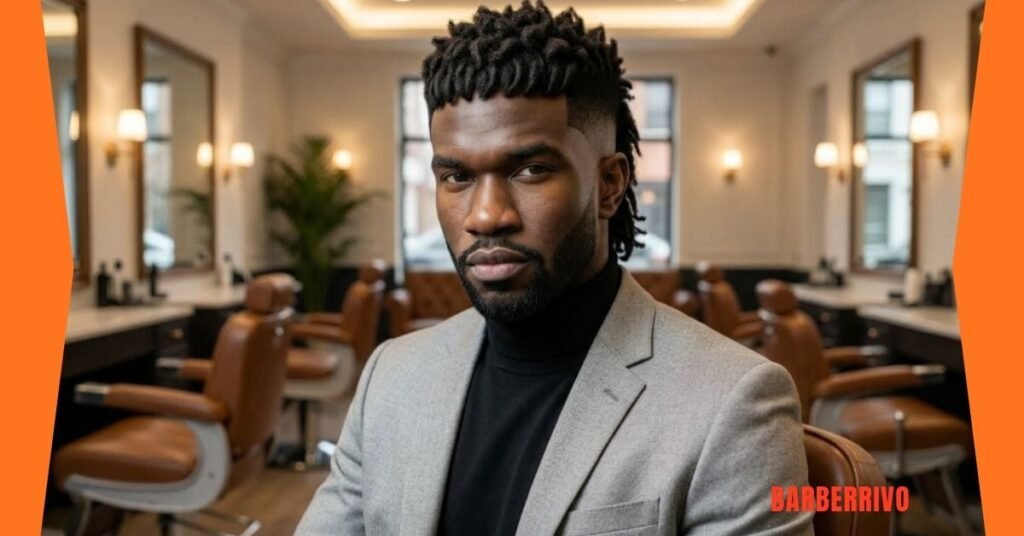
The French crop mullet takes the classic cropped fringe (short, textured, blunt across the forehead) and pairs it with mullet length in the back. It’s a clever hybrid: professional up front, playful out back. This one works great for straight hair since the crop needs some structure to sit right.
Edgar Mullet
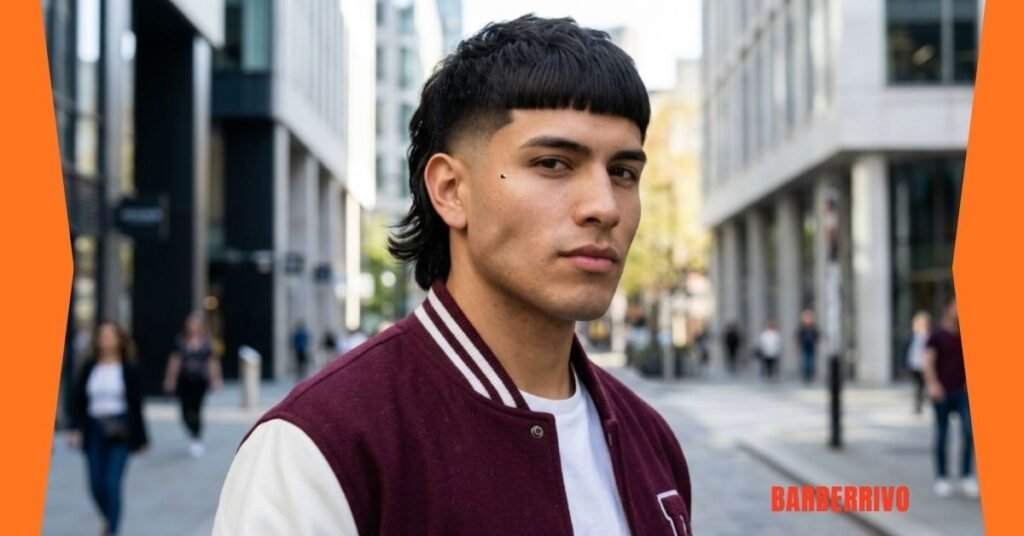
Named after the sharp, geometric “Edgar cut” popular in Latin American barbershops, the Edgar mullet combines a razor-sharp, straight-across fringe with tapered sides and mullet length behind. It’s bold and precise, best suited to guys who don’t mind frequent line-ups to keep that fringe crisp.
Korean Mullet

The korean mullet softens everything. Face-framing layers, gentle waves, and a longer back that flows rather than shocks. It’s less about contrast and more about movement, drawing heavily from K-drama and K-pop styling. If your hair has natural texture, this cut will use it beautifully.
Asian Mullet

Similar in spirit to the Korean version, the Asian mullet typically pairs a blunt fringe with an undercut and longer flowing layers at the back. It reads polished rather than rugged, and it’s become a staple among guys chasing that clean, editorial look.
K-Pop Mullet

The k-pop mullet is theatrical by design. Expect layered, slightly messy tops, soft fringe, and noticeably longer back sections with real bounce. It borrows heavily from stage styling, so don’t be shy about texture powder here. This one’s meant to move.
European Mullet
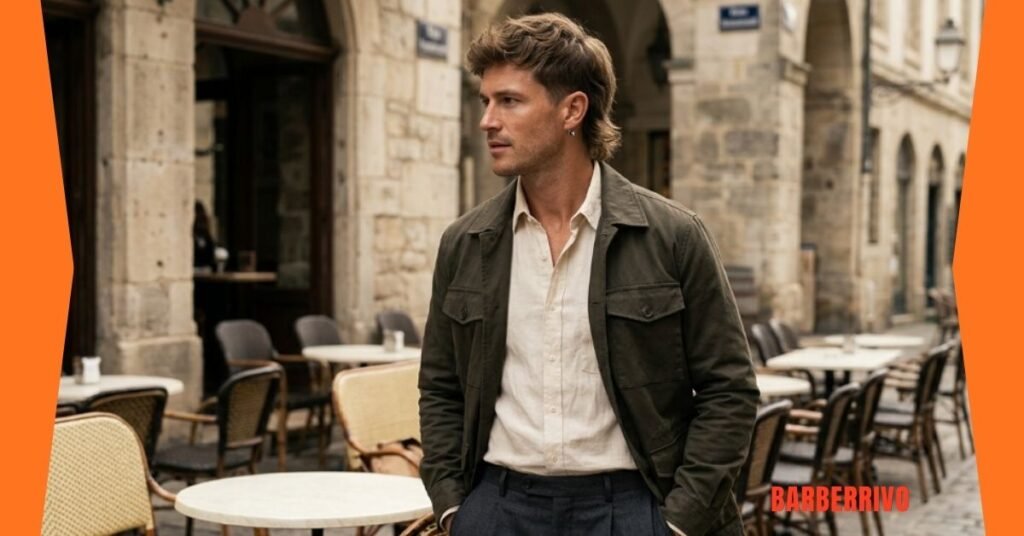
Sometimes just called the “euro mullet,” this version keeps sides tight and textured while the top and back stay looser, almost sporty. It has a slightly athletic, off-duty footballer look, which explains its popularity across European cities right now.
Textured Fringe Mullet
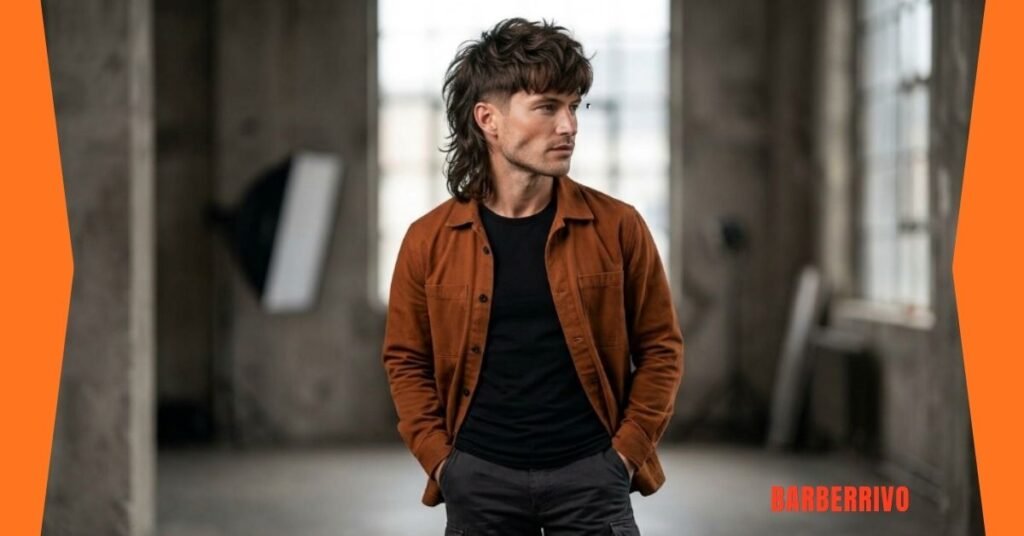
The textured fringe mullet puts real focus on the front, with a choppy, piece-y fringe that contrasts against neatly tapered sides. The extra length and layering in back give it that classic mullet drop. It’s a great pick if you want your fringe to do most of the talking.
Mullet with Bangs
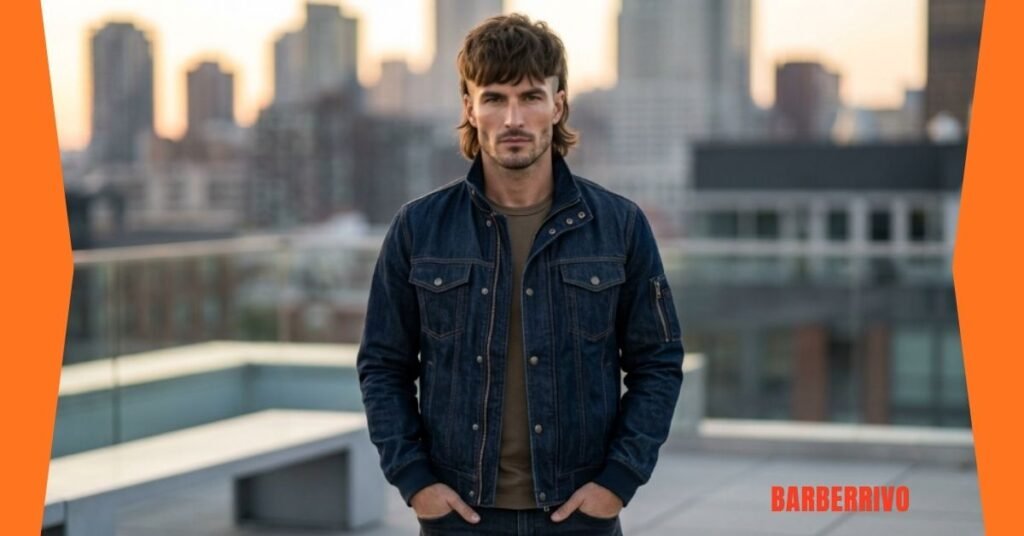
Straightforward and youthful, the mullet with bangs pairs a blunt or lightly layered fringe with longer mullet length behind. It skews younger and more playful than most variations here, and it works particularly well on fine or medium-density hair.
Comma Hair Mullet
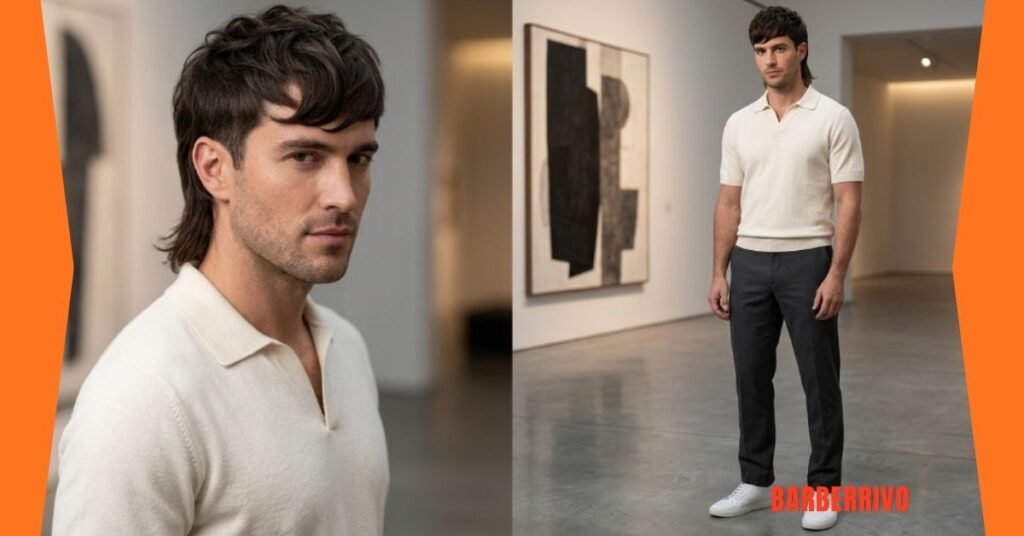
Borrowed from Korean fashion, the comma hair mullet curves the fringe gently to one side, resembling a comma shape across the forehead. Combined with tapered sides and a longer back, it’s soft, trendy, and surprisingly easy to style day to day.
Side Part Mullet

Clean and classic, the side part mullet puts a defined part up front while keeping longer layers flowing through the back. It’s one of the more office-friendly options here, striking a nice balance between put-together and a little unexpected.
Middle Part Mullet

The middle part mullet channels vintage rock energy, with hair split evenly and falling on both sides of the face. Paired with mullet length in back, it has a laid-back, almost nostalgic feel. Wavy or straight hair both work well here.
Mohawk Mullet
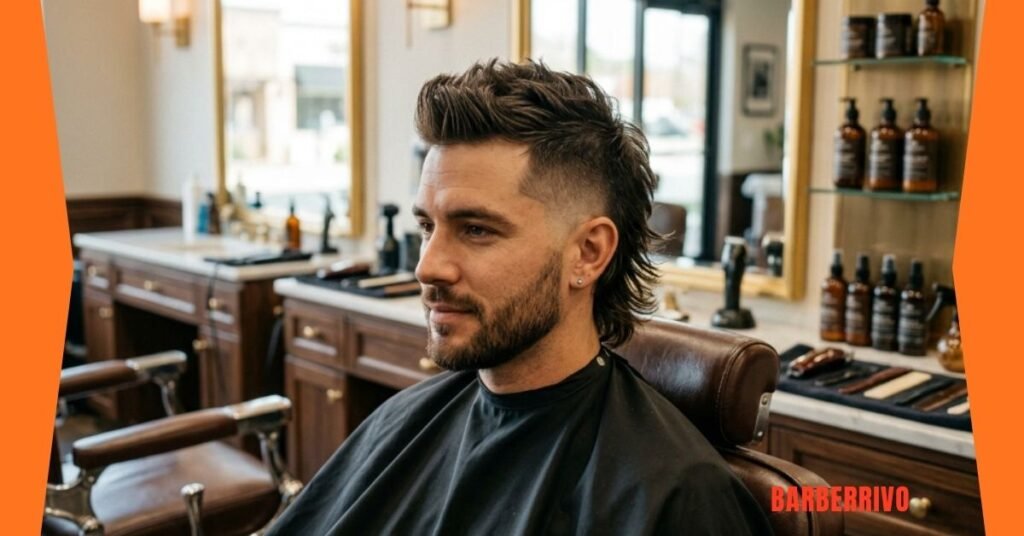
Not for the faint of heart, the mohawk mullet combines a spiked or raised center strip with tightly faded sides and a long mullet tail. It’s dramatic, attention-grabbing, and needs daily styling commitment to hold that center height.
Faux Hawk Mullet
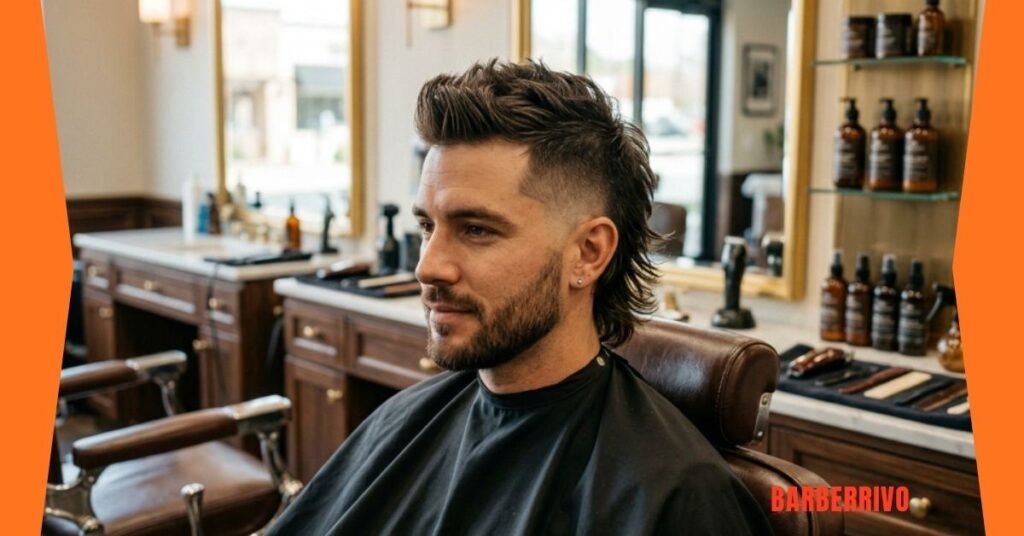
A slightly toned-down version of the mohawk, the faux hawk mullet lifts the center without shaving the sides as dramatically. You get that spiked silhouette without full commitment, which makes it easier to grow out or restyle depending on the day.
Pompadour Mullet
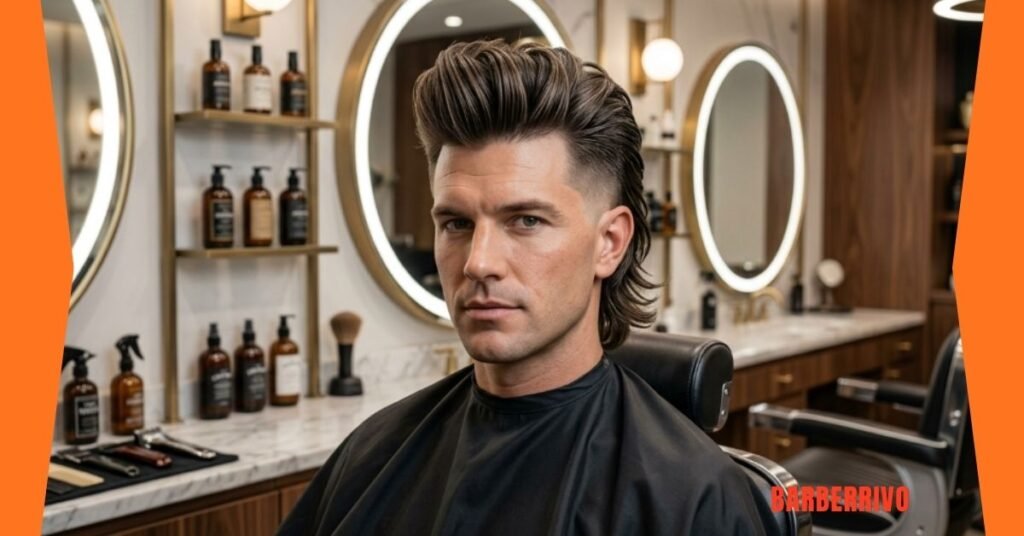
The pompadour mullet brings retro glamour to the front, sweeping the top up and back into height, while keeping mullet length flowing behind. It’s a striking, old-Hollywood-meets-modern-rebel combination that photographs beautifully with a bit of shine product.
Quiff Mullet
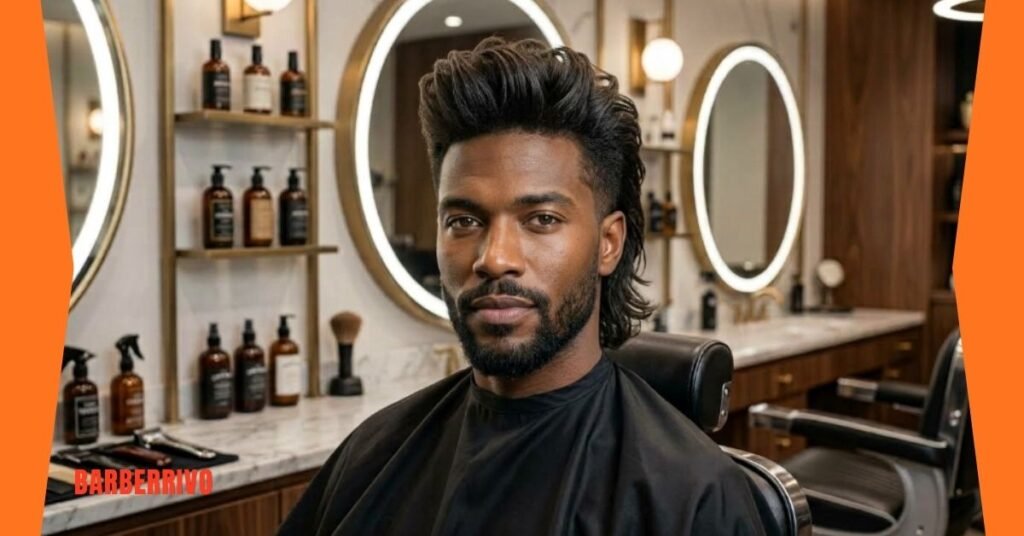
Lighter and more casual than the pompadour, the quiff mullet lifts the front just enough for volume without the heavy sweep-back. It’s an easygoing daily style, and it suits guys who want lift without much fuss.
Spiky Mullet
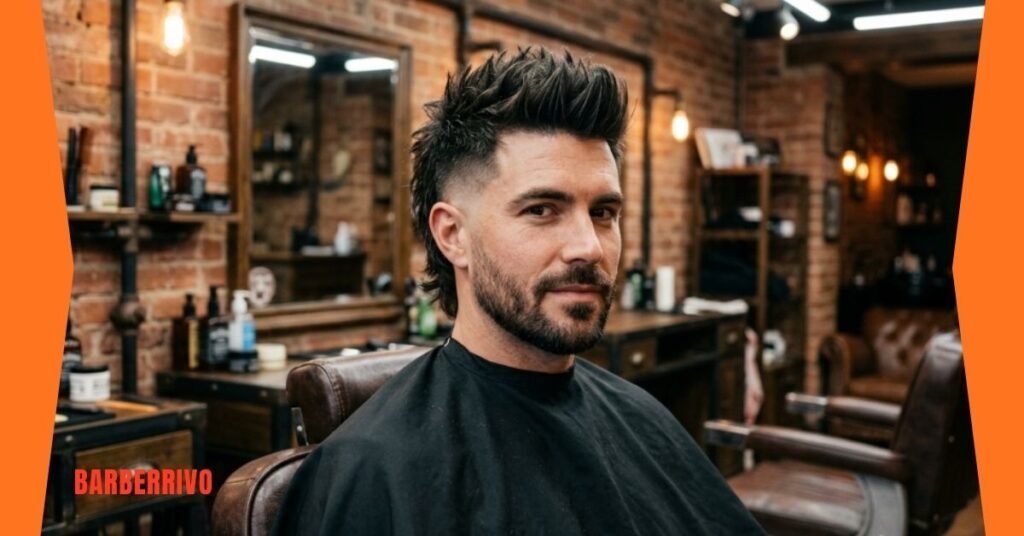
The spiky mullet uses molding paste and a bit of blow-drying to create textured spikes across the top, contrasted against a longer back and faded sides. It leans punk, energetic, and a little unpredictable.
Punk Mullet
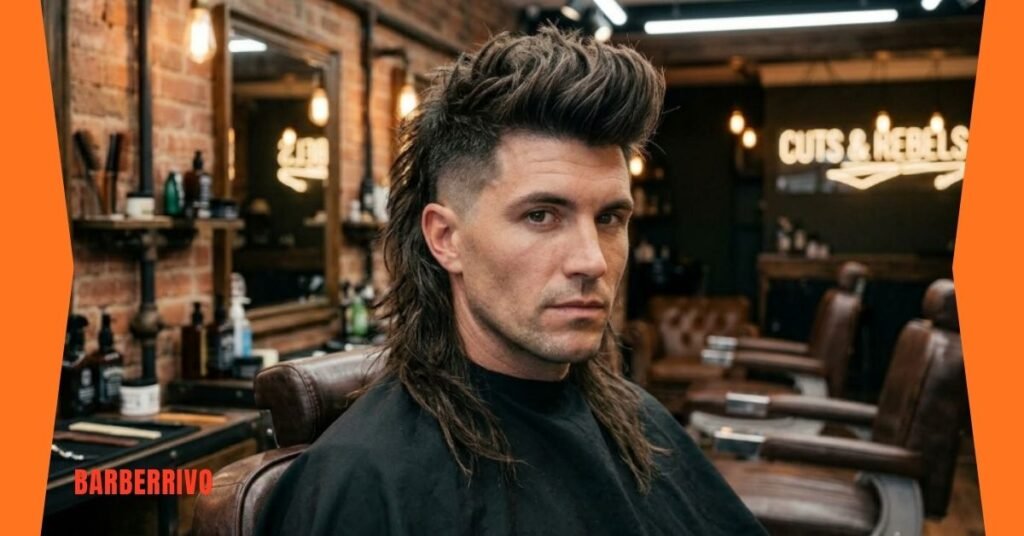
Taking things further, the punk mullet often incorporates shaved sides, dramatic spikes, and sometimes bold color to create a rebellious, subculture-inspired look. It’s not subtle, and it’s not meant to be.
V-Shaped Mullet
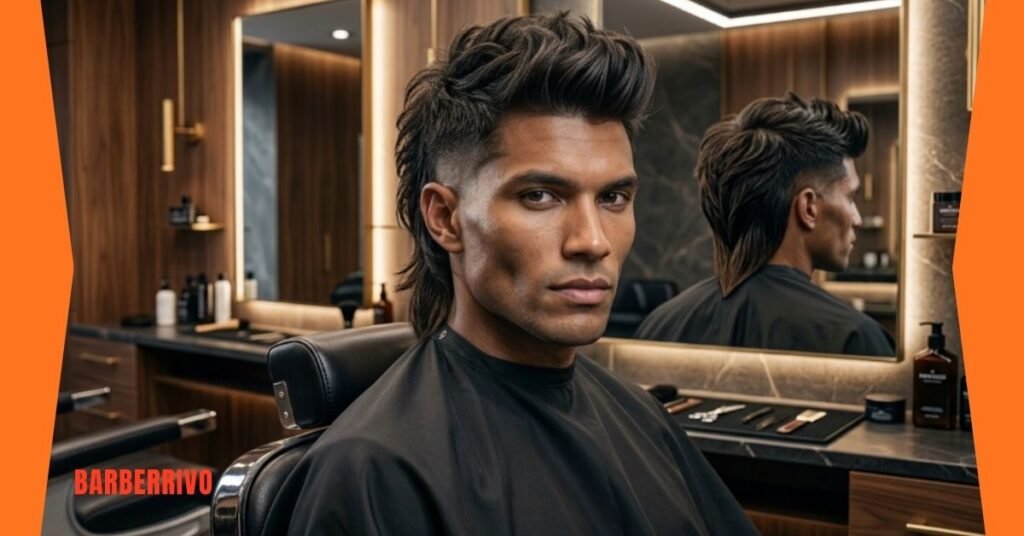
The v shaped mullet gets its name from the back section, which is cut into a defined V point rather than a straight or rounded edge. It adds a sculptural, deliberate finish that makes the length in back feel more like a design choice than an afterthought.
Flow Mullet
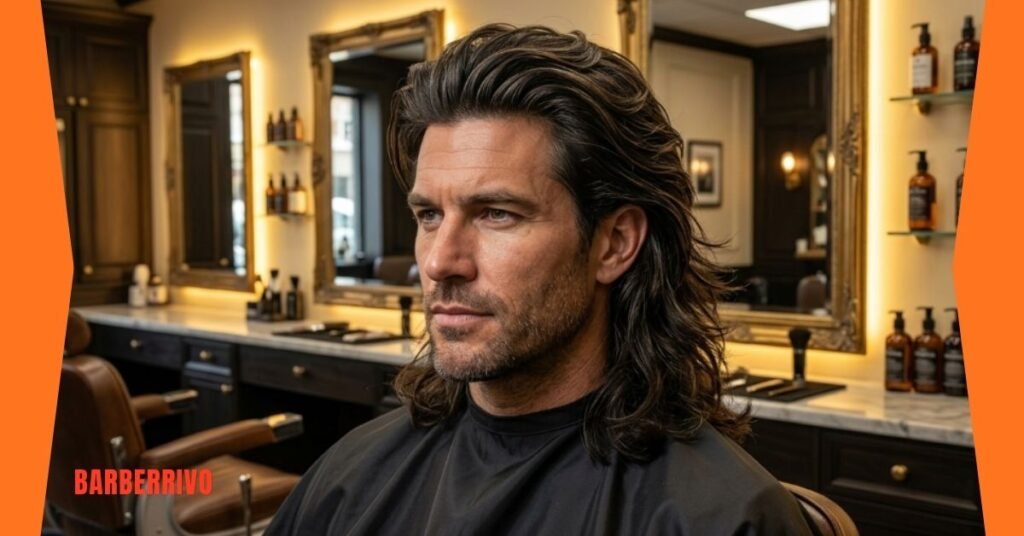
The flow mullet brushes hair straight back off the forehead, letting the length in back trail naturally. It has a sporty, effortless quality, often seen on hockey players and surfers alike, and it needs very little product to look right.
Curly Mullet
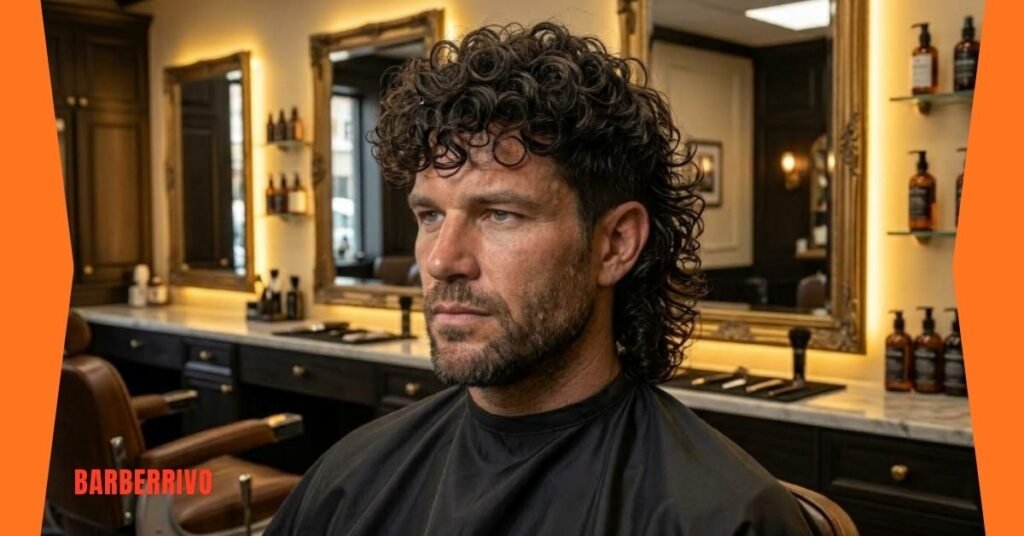
If you’ve got natural curl, the curly mullet makes the most of it. Curls add volume and texture on their own, so this cut usually needs less layering than straight versions. A diffuser and a good curl cream are really all you need to bring it to life.
Wavy Mullet

The wavy mullet sits between straight and curly, using natural wave pattern for movement without heavy curl definition. It’s beachy, relaxed, and pairs perfectly with sea salt spray for that lived-in finish.
Straight Hair Mullet
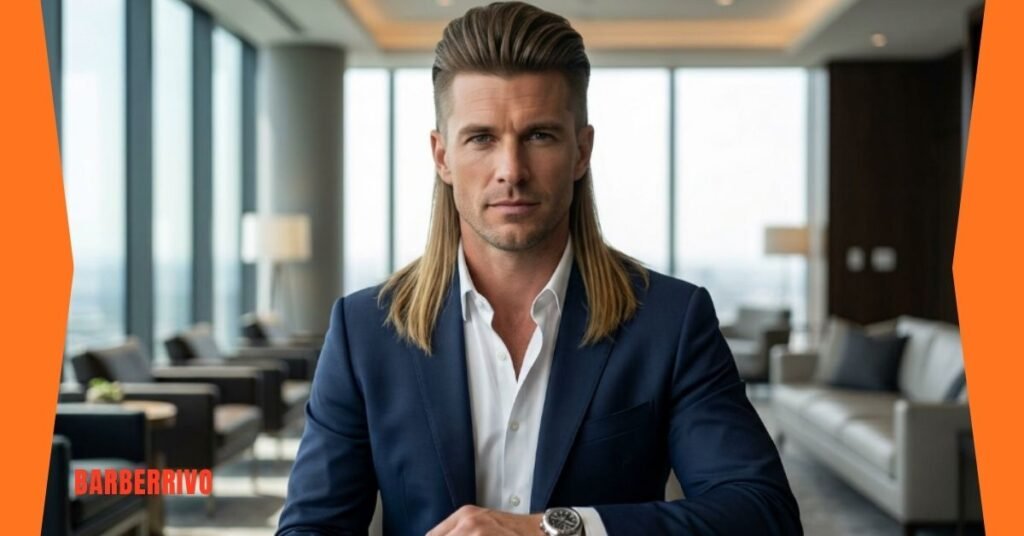
For straight hair men, the straight hair mullet relies on sharp lines and clean contrast rather than natural texture. Because straight hair shows every line clearly, precision cutting matters even more here.
Permed Mullet
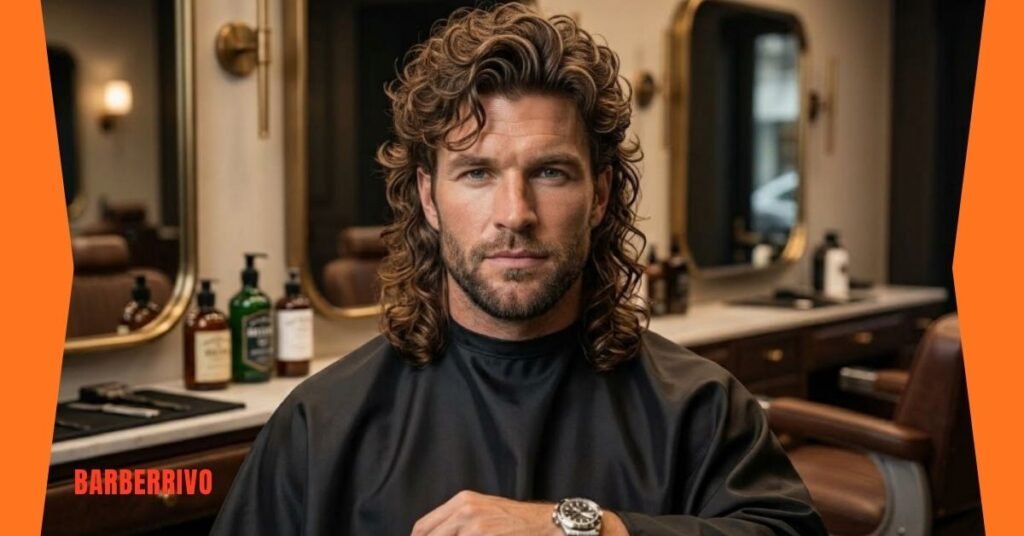
Guys with naturally straight hair who want curl often go for the permed mullet, which chemically adds tight, defined curls to the top and back. It’s a bigger commitment (both time and money) but delivers serious volume and texture that lasts for months.
Short Mullet
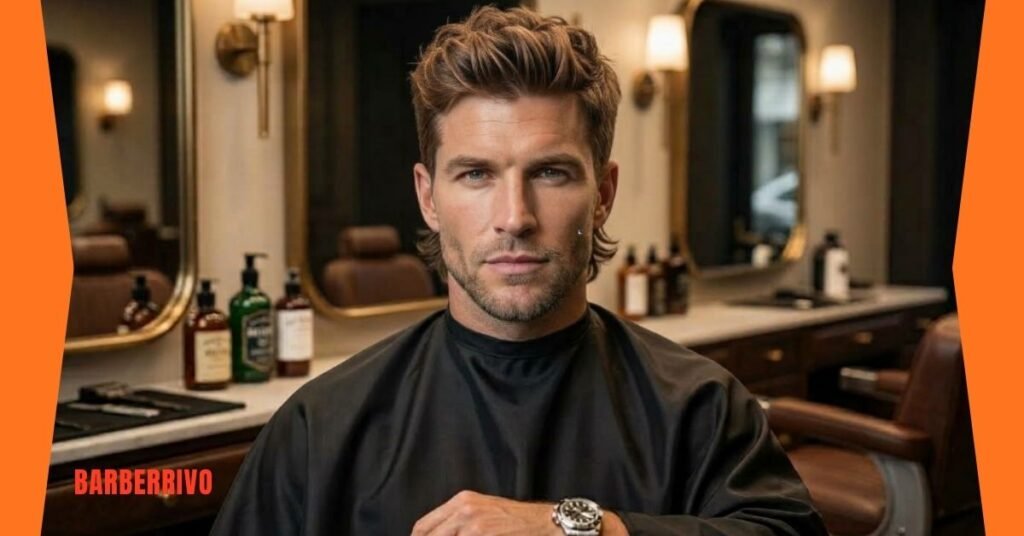
The short mullet trims down the back length considerably, offering mullet shape without the dramatic drop. It’s subtle enough for conservative workplaces while still nodding to the trend, and it counts as one of the more genuinely low maintenance hairstyle picks here.
Medium Mullet
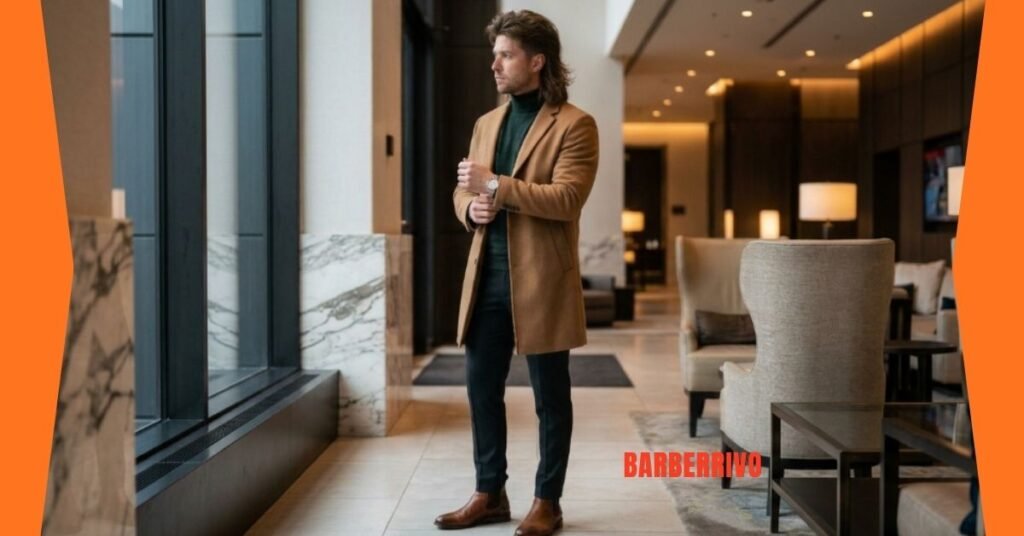
Right in the middle, the medium mullet offers noticeable length in back without going full rockstar. It’s the most balanced option for guys who aren’t sure how committed they want to be to the look.
Long Mullet
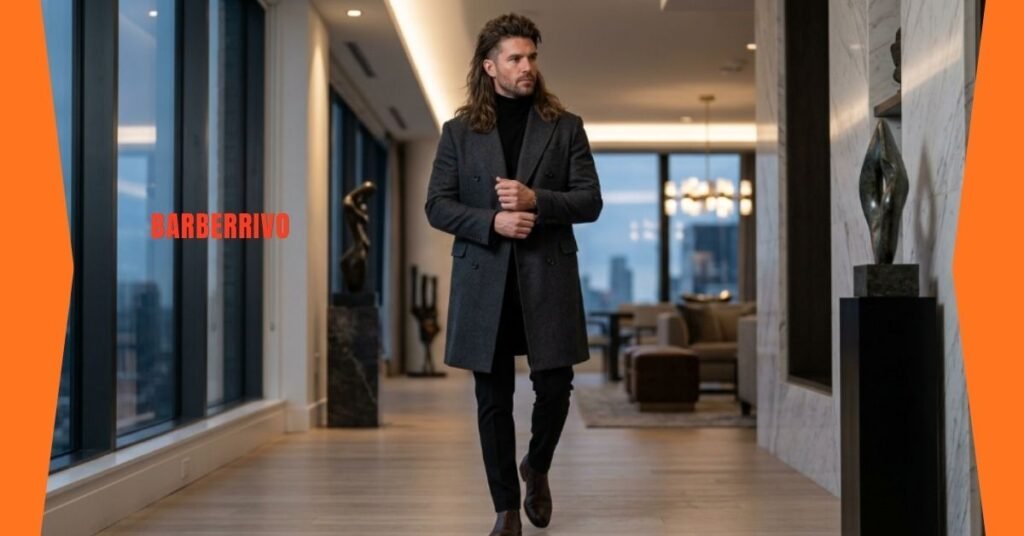
The long mullet goes all in, with dramatic length trailing well past the collar. It requires patience to grow and real discipline to maintain, but the payoff is a genuinely head-turning silhouette.
Layered Mullet

The layered mullet builds movement into every section, using layering throughout the top, sides, and back to create texture rather than one flat length. It works on nearly any hair type and tends to look fuller than it actually is.
Shaggy Mullet
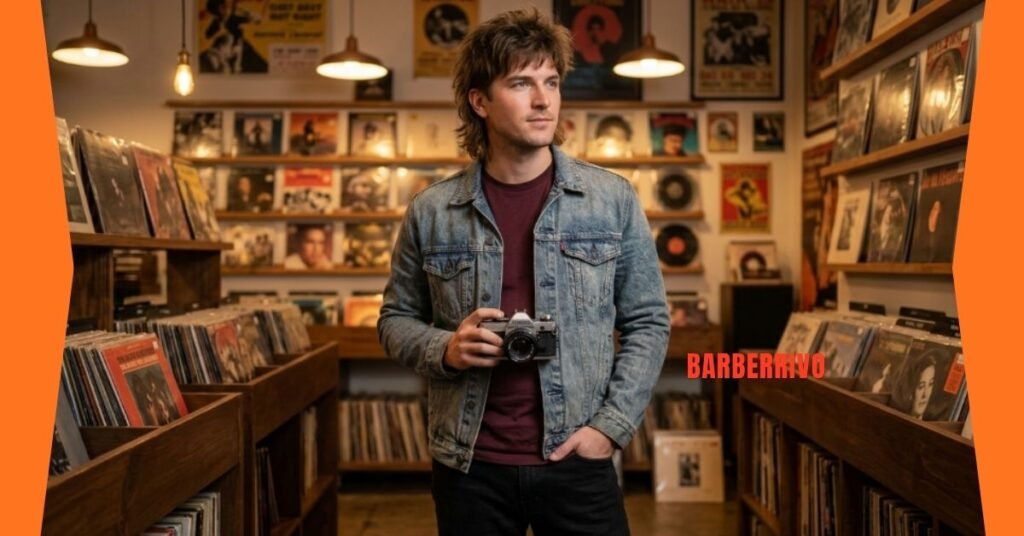
Deliberately undone, the shaggy mullet uses choppy, uneven cutting to fake a grown-out, effortless look. It’s closely related to the shag and wolf cuts above but usually keeps sides a bit shorter for contrast.
Fluffy Mullet
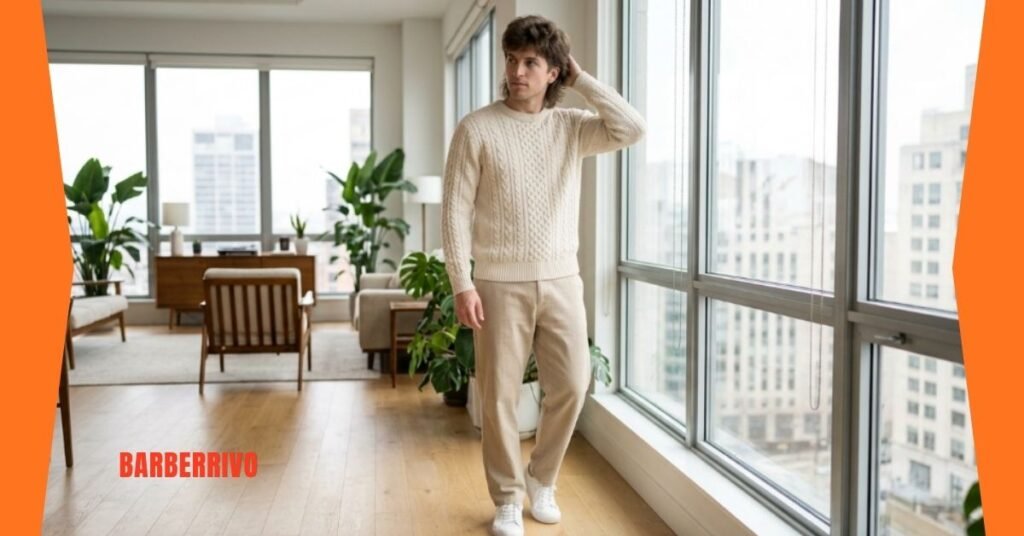
The fluffy mullet maximizes volume through diffusing and light layering, creating a soft, rounded silhouette rather than sharp lines. It suits thicker hair especially well and looks great with minimal product.
Messy Mullet
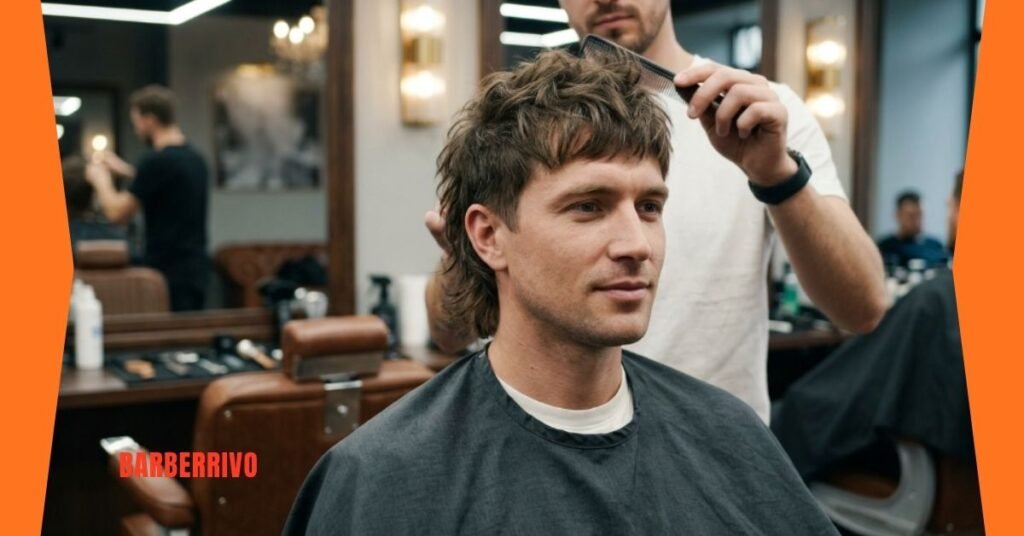
The messy mullet is exactly what it sounds like: intentionally tousled, undone, and casual. It’s achieved through texturizing and a light touch with product, favoring natural movement over precise styling.
Modern Mullet with Beard
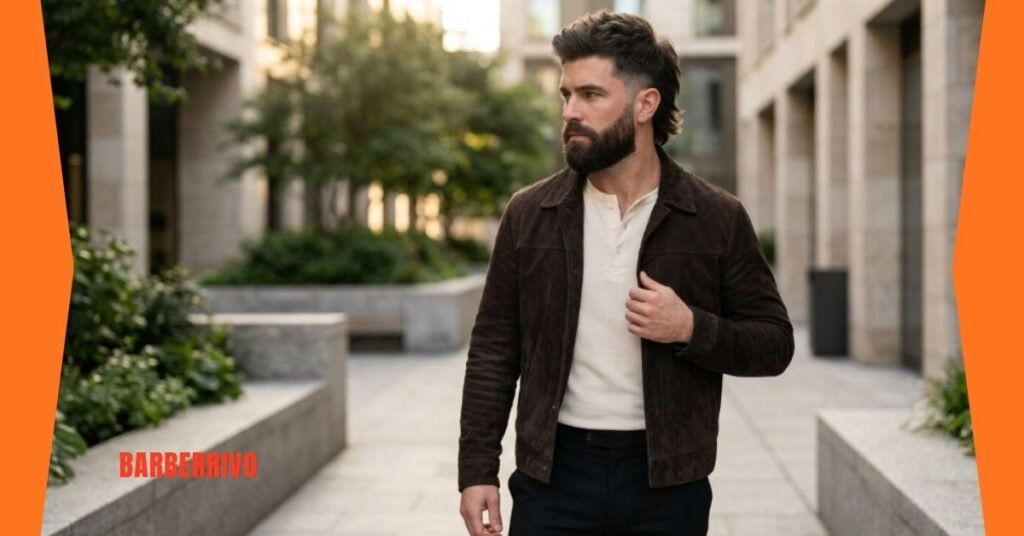
Pairing the modern mullet with a full or stubbled beard balances out the length up top with structure down below. It’s a popular combination for guys who want their whole look to feel cohesive and intentional, rather than just focusing on the haircut alone.
What Is a Modern Mullet and How Does It Differ from a Traditional Mullet?
At its core, a modern mullet keeps the same basic idea as the original: shorter sides, longer back. But that’s really where the similarities end. Where the traditional mullet from decades past relied on a blunt, unblended cut (short sides that just stopped, then long hair that just started), today’s version uses faded sides, soft layering, and a textured top to smooth the transition between lengths. The result feels sculpted rather than accidental.
Think of it this way: if the old mullet was a rough sketch, the modern one is a finished painting. Barbers now treat it as a genuine contemporary mullet style worth real technique, using tapered sides, thinning shears, and point cutting to create shape instead of just leaving length. That’s the biggest reason this retro-inspired haircut has found its way into mainstream barbershops instead of staying a punchline.
How to Choose the Right Modern Mullet for Your Face Shape and Hair Type
Not every modern mullet style flatters every face, so it helps to think about your features before you sit in the chair. Guys with round faces generally do well with added height and volume on top, since it elongates the face visually. Angular or square faces can handle sharper, more structured cuts like the Edgar mullet or two block mullet, since strong bone structure pairs nicely with defined lines. Oval faces are the lucky ones here; nearly every variation on this list will work, from the classic mullet to the wolf cut.
Hair type matters just as much as face shape. Curly and wavy hair naturally add texture and volume, so cuts like the curly mullet or wolf cut make the most of what you’ve already got. Straight hair, on the other hand, tends to look best with more structured styles that rely on sharp lines rather than organic texture, think the French crop mullet or side part mullet. Thick hair can handle heavier layering without looking flat, while fine hair often benefits from shorter, choppier layers that fake extra density.
| Face Shape | Recommended Mullet Styles |
| Round | Pompadour Mullet, Quiff Mullet, Mohawk Mullet |
| Square | Edgar Mullet, Two Block Mullet, Undercut Mullet |
| Oval | Classic Mullet, Wolf Cut, Curtain Mullet |
| Long | Curtain Mullet, Side Part Mullet, Middle Part Mullet |
How to Ask Your Barber for a Modern Mullet
Walking into a barber mullet cut appointment without a plan is asking for trouble. Even skilled barbers can’t read your mind, and “just give me a mullet” leaves way too much open to interpretation. Bring reference photos, front, side, and back angles if you can find them, and be ready to talk through specifics like fade height, top length, and how much length you actually want to keep in back.
A good barber consultation should feel like a conversation, not a lecture. Mention your daily styling habits honestly. If you’re not going to blow-dry your hair every morning, say so, because that changes what cut will actually work for your real life instead of some Pinterest fantasy.
Key Terms to Use for an Accurate Cut
Knowing the right vocabulary makes a huge difference in getting exactly what you want. Words like “taper fade mullet,” “skin fade mullet,” or “burst fade mullet” tell your barber precisely which fade style you’re after, rather than leaving them to guess. Mention whether you want a textured top or something smoother, and specify how much length to leave at the nape. The more precise your language, the less chance of a miscommunication you’ll regret for the next six weeks.
Common Mistakes to Avoid
The biggest mistake guys make is being vague about maintenance expectations. If you want a low maintenance hairstyle, say that clearly, because some mullet variations (looking at you, skin fade mullet) need trims every few weeks to stay sharp. Another common slip-up is not mentioning hair type quirks, like a cowlick or unusually thick density, that could affect how the cut actually falls once it’s dry.
How to Style a Modern Mullet
Styling a modern mullet isn’t complicated, but it does require a routine, especially if you want that “effortless” look everyone’s chasing. It starts before you even touch a comb. Clean, properly prepped hair holds shape and texture far better than hair that’s just been slept on and left alone.
Once your hair’s prepped, the actual styling process usually takes less than ten minutes. The trick is layering products correctly and using the right tools for your specific hair type, whether that’s straight, wavy, or curly.
Prep with a Volumizing Shampoo and Conditioner
Start with a clarifying or volumizing shampoo to strip away product buildup and oil that weighs hair down. Follow with a lightweight conditioner, heavy formulas can flatten the volume you’re trying to build. This step matters more than people think. Clean hair simply holds shape better, giving your styling routine a solid foundation to work from.
Add Texture with a Sea Salt Spray
Once hair is towel-dried, spritz in some sea salt spray for grit and natural-looking texture. Scrunch it through with your hands rather than combing, since combing smooths out the very texture you’re trying to create. This step is essential for that beachy, natural movement so many mullet styles rely on.
Speed Up Volume with a Hair Diffuser
If you’ve got curly or wavy hair, attach a diffuser attachment to your blow dryer and dry in sections. This preserves curl pattern while adding lift at the roots. For straight hair, skip the diffuser and instead blow-dry upward or backward with a round brush to build height and direction.
Lock In Hold with Clay, Pomade, or Texturizing Powder
Finish with texture clay, matte pomade, or texture powder, depending on the hold and finish you want. Clay gives a matte, natural look with medium hold. Pomade adds shine and flexibility. Powder is your best bet for lightweight volume without any greasy residue. Whichever you choose, work a small amount between your palms first, then distribute evenly rather than piling it all in one spot.
How to Maintain a Modern Mullet
Any stylish mullet worth having needs upkeep, full stop. The good news is that maintenance doesn’t have to eat up your whole week. A little consistency goes a long way toward keeping the shape sharp and the ends healthy between salon visits.
Most maintenance issues come down to two things: not washing correctly and skipping trims. Fix those two habits and you’ll keep your cut looking fresh for weeks longer than guys who wing it.
Everyday Hair Care Routine
Stick to a gentle, sulfate-free shampoo a few times a week rather than daily, since over-washing strips natural oils your hair actually needs. Follow up with conditioner focused on the mid-lengths and ends, especially if you’ve got longer back sections that tend to dry out faster than the shorter sides. A leave-in conditioner works wonders for curly or wavy textures that need extra moisture to avoid frizz.
How Often to Trim for Shape Retention
Plan on regular trims every four to six weeks if you’re rocking a fade-heavy style like the skin fade mullet or burst fade mullet, since fades grow out fastest and lose their crisp edge quickly. Looser styles, like the classic mullet or long mullet, can usually stretch to eight or even ten weeks between visits, since the overall shape is more forgiving as it grows.
Preventing Frizz and Flatness
Frizz and flatness are basically opposite problems, but they share a lot of the same fixes. A smoothing serum applied to damp hair tames flyaways, while a lightweight mousse at the roots keeps things from going flat by midday. Always use heat protectant before any blow-drying or hot tool use, since heat damage over time is what actually causes long-term frizz and breakage.
Modern Mullet vs. Traditional Mullet: Key Differences
The gap between old-school and new-school mullets comes down to technique, not concept. Traditional mullets from the 70s and 80s relied on scissors alone, creating that harsh, unblended line between short and long sections. There wasn’t much thought given to hair texture or face shape; it was more one-size-fits-all.
Today’s modern mullet treats the cut as an actual craft. Barbers use clippers, thinning shears, and razors together to create seamless transitions, whether that’s a taper fade mullet or something softer like the curtain mullet. The modern version also plays much more with color, texture products, and personalization based on your specific hair type, something the original mullet never really considered.
| Feature | Traditional Mullet | Modern Mullet |
| Sides | Blunt cut, no blending | Faded or tapered, smooth blend |
| Top | Flat, minimal texture | Layered, textured, often lifted |
| Styling | Rarely styled, worn natural | Regular use of clay, pomade, or powder |
| Customization | Mostly one shape for everyone | Tailored to face shape and hair type |
Final Thoughts
The modern mullet has earned its spot as one of the most versatile haircut options out there. Whether you lean toward a classic mullet, a wild wolf cut, or something with a sharp skin fade mullet, there’s a version built for your face shape and hair type. It’s proof that a haircut once seen as a punchline can turn into genuine bold men’s hairstyle territory.
Getting it right just takes the right prep and a clear conversation with your barber. Bring photos, know your fade terms, and stay on top of trims every few weeks. Do that, and your stylish mullet will stay sharp, fresh, and ready for whatever 2026 throws your way.
FAQs About Modern Mullets
What is a modern mullet?
A modern mullet is an updated version of the classic short-sides, long-back haircut, built with faded sides, blended layers, and a textured top for a cleaner, more intentional finish than old-school versions ever had.
How is a modern mullet different from a traditional mullet?
The traditional cut relied on a blunt, unblended line between lengths. A modern mullet uses tapered sides, layering, and product to smooth that transition and create real shape.
What are the most popular modern mullet variations?
Right now, the taper fade mullet, burst fade mullet, wolf cut, and curly mullet rank among the most requested styles at barbershops worldwide.
What face shape suits a modern mullet best?
Oval faces suit nearly every variation, while round faces benefit from added height and angular faces pair well with sharper, structured cuts like the Edgar mullet.
Can you get a modern mullet with curly or wavy hair?
Absolutely. Curly hair men and wavy hair men often get extra volume and texture for free, which suits styles like the wolf cut and curly mullet especially well.
Are modern mullets high maintenance?
It depends on the style. Fade-heavy versions like the skin fade mullet need trims every four to six weeks, while looser cuts like the classic mullet can stretch out longer between visits.
How often should you trim a modern mullet?
Most guys should plan on a trim every four to six weeks to keep fades sharp and layers looking clean, though this varies based on your specific cut.
What products work best for styling a mullet?
Sea salt spray, texture clay, matte pomade, and texture powder each serve different purposes, from adding grit to locking in hold, depending on the finish you’re after.
How do you ask for a modern mullet at the barber?
Bring reference photos and specify fade height, top length, and back length clearly. The more precise your language, the better your barber consultation will go.
How long does it take to grow out a modern mullet?
Most guys need around three to five months to grow enough length in back for a proper mullet shape, while sides stay trimmed and tidy throughout that process.
Are mullets still in style in 2026?
Yes. The mullet haircut trends 2026 show no signs of slowing down, with strong popularity across social platforms and continued demand at barbershops worldwide.
Who suits a modern mullet?
Confident guys with medium to thick hair tend to suit this cut best, though nearly anyone can pull it off with the right styling and a barber who understands grooming habits and personal style.

Ryan Carter is a men’s grooming writer who covers haircuts, hairstyles, beard care, and barbering trends. He shares practical style advice and grooming tips to help men look sharp and stay confident.